

Wiki is in the process of importing stuff
Please be patient
imported>BayCorvusTR No edit summary |
m new format |
||
| Line 1,024: | Line 1,024: | ||
*[[File:Cball-US.png]] [https://www.youtube.com/channel/UCihTFVasF5brNjL-UyIfrcQ Liberal Sanity Project] [[File:3way.png]] | *[[File:Cball-US.png]] [https://www.youtube.com/channel/UCihTFVasF5brNjL-UyIfrcQ Liberal Sanity Project] [[File:3way.png]] | ||
*[[File:Cball-US.png]] [https://www.youtube.com/@realryanchapman Ryan Chapman] [[File:Soclib.png]] | *[[File:Cball-US.png]] [https://www.youtube.com/@realryanchapman Ryan Chapman] [[File:Soclib.png]] | ||
*[[File:Cball-US.png]] [https://www.youtube.com/@johnnyharris Johnny Harris] [[File: | *[[File:Cball-US.png]] [https://www.youtube.com/@johnnyharris Johnny Harris] [[File:Mediacracy.png]] | ||
*[[File:Cball-US.png]] [https://www.youtube.com/@StardustStreams Stardust] [[File:Leftneolib.png]] | *[[File:Cball-US.png]] [https://www.youtube.com/@StardustStreams Stardust] [[File:Leftneolib.png]] | ||
*[[File:Cball-US.png]] [https://www.youtube.com/@ScubaMySteve Stephen Michael Davis] [[File:Neolibert.png]] | *[[File:Cball-US.png]] [https://www.youtube.com/@ScubaMySteve Stephen Michael Davis] [[File:Neolibert.png]] | ||
Revision as of 07:21, 28 June 2026
This page covers the political concept of liberalism. For a page on liberalism from a philosophical perspective, see the File:Philosophyball icon.png Philosophyball Page
Liberalism (Lib) is a File:Centrist-yellow.png centrist (File:Centre-Lib.png generally center-libertarian leaning), File:Econlib.png economically liberal and usually File:Cultcenter.png culturally centrist to File:Rfrm.png left-leaning ideology (although there are also some  culturally right liberal ideologies like
  Conservative Liberalism and
  Reactionary Liberalism).
The elements generally regarded as necessary for the development of a liberal state can be described as follows:
- File:LibFoundation.png Governmental respect for individual liberty
- File:FairFoundation.png Ensured equality of opportunity under the law
- File:Marklib.png A free and open-market economy
- File:Constlib2.png Constitutionally limited government power
- File:SecLib.png The separation of religious and state power
Other elements often found in liberal societies are:
- File:Parti.png A multi-party system of democracy
- File:Globcap.png Openness towards free trade
 A tax-funded welfare state
Liberalism is regarded as being one of the dominant ideologies within Western nations. He is also dominant in some countries in Africa, though most African countries are  social democratic,
  progressive,
  conservative,
  nationalist, and/or
  authoritarian. There is little liberal influence in Asia, except in File:Cball-Japan.png Japan, File:Cball-Taiwan.png Taiwan, File:Cball-Philippines.png the Philippines and File:Cball-South Korea.png South Korea, as well as factions of the
  Chinese Opposition.
Etymology
(here go the names and aliases of the ideology in a bulleted list explaining their etymology)
File:Historian.png History
File:ProtoLib.png Proto-Liberalism File:Humanismpix.png
Before the Enlightenment, classical thinkers such as  Aristotle were considered proto-liberal for their support for private property in opposition to
  Plato's collectivism, which is instead considered by liberals such as Karl Popper to be the precursor of totalitarianism. File:Socrates.png Socrates has also been viewed as a proto-Liberal, due to his conception of an early kind of contract theory, his support for free speech, and his opposition to Athens' File:OchloAngry.png "tyranny of the majority".
The ancient Chinese writer File:Laozi.png Laozi, founder of Taoism, has often been described as a libertarian who like liberals favored minimal government. File:Puritan.png Puritans (especially John Milton) also influenced liberal values somewhat, with their advocacy of common men.
Proto-Liberalism had many states of its own. Beginning in 1505, the nobles (szlachta) of Poland began to establish their own political rights, like the right to  rebel against an unjust government, the right to File:Emon.png elect the king, a File:Parl.png parliament, File:Civlibert.png religious freedom, a bill of rights, a
  federal or File:Confed.png confederal system, a File:Conmon.png constitutional monarchy, and others. This was called File:Noble.png Golden Liberty, and served as a major inspiration for many File:Jeffersondem.pngFile:Washdem2.png Liberals
  and proto-Liberals (though it was criticised by File:Montesquieu.png Montesquieu for the horrendously harsh treatment of serfs). Later, the szlachta said they had established
  "republican Liberty" in Poland.
The second Proto-Liberal state was the File:Cball-DutchRepublic.png Dutch Republic, established after the Eighty Years' War. In this new Republic there was a File:Parl.png parliament, File:Civlibert.png freedom of thought, growth of early  capitalism, and an expansion of the arts and File:Scientist.png science. The Netherlands quickly became a global power, rivalling the
  absolutist empires. The main ideologist of the Dutch Republic's political model was File:RenaissanceHumanism.png Hugo Grotius, a File:Humanismpix.png humanist who came up with ideas of just war, natural law, international law, and natural rights.
A prominent proto-Liberal was File:Whig.png Algernon Sidney, who wrote Discourses Concerning Government and came up with ideas of  limited government, consent of the governed, the right to rebel against a corrupt government, and
  opposition to the divine right of kings.
File:Whig.pngFile:JohnLocke.png 17th and 18th Centuries File:Usclib.pngFile:Frencons.png
The Father of Liberalism was File:JohnLocke.png John Locke, an English philosopher, physician and slave trader. Locke was a close friend of File:Whig.png Anthony Ashley Cooper, the 1st Earl of Shaftesbury, slave trader, large landowner, and the founder of the File:Whig.png Whigs. Locke came up with, and refined, many ideas that became the core of Liberal ideology: consent of the governed, natural rights, File:Empiricism.png empiricism, and limited government. Both Locke and Shaftesbury had to flee from England due to political persecution, and Locke only returned after the File:Cball-Oranje.png Glorious Revolution of 1688, the first Liberal revolution in history that overthrew the absolutist  Catholic king, James II, establishing a File:Conmon.png constitutional monarchy, official consent of the governed in English law, File:Civlibert.png religious freedom for Protestants, and the File:GRights.png right to keep and bear arms.
After File:Cball-Sweden.png Sweden's defeat in the Great Northern War in 1719, the nobility established a File:Parl.png parliamentary liberal democracy, beginning the Age of Freedom. During this period the nobility drew inspiration from the File:Whig.png Whigs and translated the works of File:JohnLocke.png John Locke into Swedish. Sweden became a 2-party state, with the pro-French File:Cball-Sweden.png Hats competing against the pro-Russian  Caps. During this time
  corruption increased, eventually leading to the 1772 coup, where File:Gustaviii.png Gustav III ended the Age of Freedom and reintroduced
  absolute monarchy. Whilst ending an early liberal state, File:Gustaviii.png Gustav was influenced by File:Montesquieu.png Montesquieu.
 19th Century File:Radlib.png
See:
National Liberalism, File:Georgist.png Georgism
In the 19th century liberalism was strongly associated with the free market, laissez faire economics, opposition to absolutism and in some contexts with the national liberation struggle against the old imperialisms.
This era also saw, in the wake of American and French ideals, the progressive collapse of despotic influence in Europe and the spread, especially after 1848, of republicanism or at least of somewhat constitutional forms of government even in very reticent countries such as Austria-Hungary and the newly formed German Empire, which however maintained, despite the liberal and popular influence on the national unification movement, a semi-absolutist, militaristic, aristocratic and illiberal tradition in the wake of  Prussianism (however the only significative exception that will remain firmly reactionary and anti-liberal will be the Russian Empire). The English, Portuguese and Spanish monarchies liberalized a lot (not without violence in the second and third case), in Italy the Risorgimento itself was the result of moderate liberal ideas while France was forced to return to monarchism after the Congress of Vienna in 1815 but became a liberal monarchy with the July Revolution of 1830, then briefly democratic republic in 1848 immediately followed by the second (authoritarian) French empire of Napoleon III until defeat at Prussian hands and the establishment in 1870 of a third republic with liberal-conservative, radical and socialist elements.
In the new world, the File:Hamiltonianism.png federalist conservatives lost their influence and dissolved at the beginning of the century, leaving the field open to the more liberal and agrarian File:Jeffersondem2.png Jeffersonian Democracy, which would then evolve into File:Jacksonian Democracy.png Jacksonian Democracy (which was opposed by the American Whigs who, unlike their British counterparts, were much more conservative and protectionist), popular especially among slave-owning Southern Democrats, rigidly linked to economic liberalism, decentralization,
Prussianism (however the only significative exception that will remain firmly reactionary and anti-liberal will be the Russian Empire). The English, Portuguese and Spanish monarchies liberalized a lot (not without violence in the second and third case), in Italy the Risorgimento itself was the result of moderate liberal ideas while France was forced to return to monarchism after the Congress of Vienna in 1815 but became a liberal monarchy with the July Revolution of 1830, then briefly democratic republic in 1848 immediately followed by the second (authoritarian) French empire of Napoleon III until defeat at Prussian hands and the establishment in 1870 of a third republic with liberal-conservative, radical and socialist elements.
In the new world, the File:Hamiltonianism.png federalist conservatives lost their influence and dissolved at the beginning of the century, leaving the field open to the more liberal and agrarian File:Jeffersondem2.png Jeffersonian Democracy, which would then evolve into File:Jacksonian Democracy.png Jacksonian Democracy (which was opposed by the American Whigs who, unlike their British counterparts, were much more conservative and protectionist), popular especially among slave-owning Southern Democrats, rigidly linked to economic liberalism, decentralization,  anti-elitism, white male suffrage and Strict constructionism but which was ousted from power in 1860 with the election of the moderate Republican Lincoln with his centralization programs. After the Civil War, the Bourbon Democrats strove to maintain the typical ideals of classical liberalism in the USA and above all the gold standard in opposition to bimetallism.
As the century progressed, liberals, from their revolutionary and progressive origins, were moved further and further to the right of the political spectrum due to the emergence of socialism to its left, although File:Tradcon.png conservatives remained further to the right. In the late 19th century a more left-wing and social justice-focused strain of liberalism emerged in the British Liberal Party leading to divisions in the party between classical liberals and those who would evolve into social liberals.
anti-elitism, white male suffrage and Strict constructionism but which was ousted from power in 1860 with the election of the moderate Republican Lincoln with his centralization programs. After the Civil War, the Bourbon Democrats strove to maintain the typical ideals of classical liberalism in the USA and above all the gold standard in opposition to bimetallism.
As the century progressed, liberals, from their revolutionary and progressive origins, were moved further and further to the right of the political spectrum due to the emergence of socialism to its left, although File:Tradcon.png conservatives remained further to the right. In the late 19th century a more left-wing and social justice-focused strain of liberalism emerged in the British Liberal Party leading to divisions in the party between classical liberals and those who would evolve into social liberals.
 20th Century
See:
Conservative Liberalism, File:Keynes.png Keynesian School, File:Chilib.png Chicago School,
Austrian School

Just before the first world war, the developing countries, especially the United States along begins to develop from its one ideology, File:Woodrow.png Woodrow Wilson, the president during that time uses Conservative Liberalism to justify the excuse the absence during the war where they can free trade until some country decide to attack. After the first world war, the popularity of Liberalism grew more with the rise of File:FDRism-alt.png Franklin Roosevelt, introducing Social Liberalism. And in awake of the Second World War, the rise even grew upon to the resistance inside the occupied countries by the Axis powers. (here goes the general history of the ideology stuff that does not fit into the proto, origin, peak, downfall and modern section)
File:ModernLib.png 21st Century File:Social Neoliberalism.png
See:
Third Way,
Neoconservatism, File:Neotech.png Technoliberalism, File:Libconserv3.png Liberal Conservatism,
Christian Democracy, File:Synclib.png Big Tent Liberalism, File:Civlibert.png Civil Libertarianism

Since the downfall of the Soviet Union, Liberalism still going on strong to this very day. However, it has faced recent challengers, such as File:CHNNeocon.png Chinese Neoconservatives, File:Rpop.png Right-Populists, File:Fundamentalism2.png Religious Fundamentalists, and Authoritarian Leaders (Both the  Socialist,
  Capitalist,
  Progressive, and File:AuthCon2.png Conservative variants). Liberalism still, however, is the vastly dominant ideology across the west, and File:Cball-NATO.png NATO, a relatively liberal organization, has continued growing.
Influenced
(which ideologies this ideology has influenced and how it influenced them)
Examples
IRL Examples
(irl examples of the actual ideology happening in real life)
Fictional Examples
(fictional examples of the ideology happening in fiction)
Comparisons
parallels to insert ideology
(similar ideologies to the ideology and the parallels it has)
parallels to insert movement
(similar movements to the ideology and the parallels it has)
Intellectuals
Main Intellectual
(this section talks about the most important intellectual to the movement)
File:Fukuyama.png Fukuyamaism
Francis Fukuyama (born 1952) is best known for his work on political order, institutional development, and the evolution of liberal democracies. Fukuyama’s intellectual trajectory spans decades of academic research, policy advising, and public commentary, reflecting both his evolving perspective on governance and his engagement with global political debates.
Fukuyama’s early career was shaped by the context of the Cold War. He studied at Harvard University, focusing on political science and economics, before earning his doctorate at Harvard University. During this period, he became deeply interested in the dynamics of liberal democracy versus authoritarian regimes, contributing to his early  anti-Communist stance and skepticism of
  socialist systems. His opposition to authoritarianism was evident in his analyses of Soviet and post-Soviet societies, where he highlighted the dangers of centralization, repression, and lack of political pluralism.
The publication of The End of History and the Last Man (1992) marked a turning point in Fukuyama’s intellectual prominence. In it, he argued that liberal democracy represented the culmination of humanity’s ideological evolution, a thesis that reflected his belief in  classical liberalism and
  globalism. This work also displayed his
  bioconservative leanings, emphasizing the importance of cultural and moral norms alongside institutional frameworks. Fukuyama’s analysis drew on historical examples, including the fall of communism in Eastern Europe and the consolidation of democratic governance in postwar Western states, to argue for the resilience of liberal institutions.
Fukuyama’s later scholarship shows nuanced positions on social and economic policy. He endorses File:Soccap.pngsocial capitalism and elements of social democracy, arguing that liberal market economies require effective social policies to maintain cohesion and legitimacy. While maintaining a self-proclaimed commitment to classical liberalism, he also supports File:Glib.pngenvironmentally progressive policies consistent with green liberalism, emphasizing sustainability as integral to long-term institutional stability. This evolution illustrates his gradual shift toward Third Way and File:Post3wayNeolib.pngpost-neoliberal frameworks, particularly in response to rising inequality and global economic challenges.
Throughout his career, Fukuyama has consistently expressed skepticism toward populist authoritarianism. He has critiqued leaders like  Vladimir Putin and
  Donald Trump for undermining liberal institutions and eroding democratic norms. His opposition to authoritarian and nationalist populism is grounded in both theory and observation, reflecting his broader commitment to File:LibNat.pngliberal nationalism—where civic identity, rule of law, and institutional accountability are central to political order. These critiques extend to his stance on global governance, where he advocates multilateral cooperation and engagement, consistent with his globalist outlook.
Fukuyama’s work also emphasizes the interplay between political institutions and cultural factors. He often examines how moral and ethical frameworks—derived from historical and social traditions—interact with governance structures, aligning with his bioconservative perspective. While primarily focused on liberal democracy, he engages critically with socialism and leftist ideologies, noting the practical challenges they present, though his assessment of socialist policy has softened somewhat post-2018 in recognition of contemporary welfare and social equity considerations.
Across decades of scholarship, public debate, and policy advising, Fukuyama’s career reflects a consistent effort to reconcile liberal democratic theory with the complexities of modern governance. His emphasis on institutional integrity, social cohesion, and global engagement demonstrates the practical applications of his political thought, making him a central figure in contemporary debates on democracy, capitalism, and the limits of ideological evolution.
Foundations and Beliefs
Tenets
Though liberalism is rather vaguely defined, and its definition alters depending on when and where the term is used, it is typically associated with values such as File:Liberal Democracy.png multiparty democracy, File:LibFoundation.png personal freedom, File:FairFoundation.png equality of opportunity, File:SecLib.png secularism, human progress, File:Internation.png international co-operation, and File:Marklib.png open-market economics.
What separates Liberal Democracy from pure Classical Liberalism is its higher emphasis on File:Socjust.png social justice and File:Equality.png equality in comparison to its predecessor. Liberal Democracy tends to support moderate means-tested  welfare targeted at the poor to make sure that people can meet their basic needs. He, also with his dad, Classical Liberal, influences a lot of other liberal ideologies.
Consent of the Governed
Equality before the Law
Free Speech
Right to Property
Framework
(this section puts all the beliefs into a larger cohesive framework and makes them mix with each other)
Misc
(random stuff that doesn't fit in any of those categories)
Variants
Internal conflicts in ideology
File:L-lib.png Left-Liberalism File:Leftliberalism-icon.png
File:R-lib.png Right-Liberalism File:Rightliberalism-icon.png
Factions in Ideology
(these are the general positions members in the ideology take i.e. some take a more conservative line)
Sub-Ideologies
File:Liberal Democracy.png Liberal Democracy
Liberal Democracy is a combination of  liberal political ideologies that operates under a File:Repdemgen.png representative democratic form of government. It is characterized by elections between File:Parti.png multiple distinct political parties, the File:Decentral.png separation of powers into various different branches of government, the File:Krit.png rule of law in everyday life as part of an open society, a File:Markets.png market economy with private property, the File:HumanRights.png equal protection of human rights, File:Civilib.png civil liberties, and political freedoms for all people. This the most known and common type of democracy in the west, and is usually referred as just "
 Democracy" in the west.
Schools of Thought
File:LibInternat.png Liberal Internationalism
Liberal Internationalism is a foreign policy doctrine that argues that File:Internation.png international organizations should achieve multilateral agreements between states that uphold rules-based norms and promote File:Liberal Democracy.png liberal democracy through things like File:Humane.png humanitarian aid or File:Libhawk.png military intervention. It is defined by achieving global structures within international systems that are inclined towards promoting a liberal world order through things like File:Globcap.png global free trade, File:Econlib.png liberal economics, and File:Constlib2.png liberal political systems. These international organizations would include institutions like File:Cball-NATO.png NATO,  EU, File:Cball-UN.png UN, and the File:IMF.png IMF.
File:SecLib.png Secular Liberalism
Secular liberalism is a form of liberalism in which  secularist principles and values, and sometimes non-religious ethics, are especially emphasised. It supports the separation of religion and state. Moreover, secular liberals are usually advocates of File:Liberal Democracy.png liberal democracy and the open society as models for organizing stable and peaceful societies.
File:CultLib.png Cultural Liberalism
Cultural Liberalism is a social philosophy that expresses the social dimension of liberalism and favors the  freedom of individuals to choose to whether to conform to cultural norms. Although, commonly referred to as
  social liberalism in the context of the United States, doesn't imply an ideology per say, and just the general attitude that individuals should be free to decide their own decisions regardless of the political ideology.
This follows the File:Mill.png harm principle, as cultural liberals believe that society shouldn't impose any specific code of behaviour on individuals, they defend the moral rights of nonconformists to express their own identity however they see fit as long as they do not harm anyone else.
Regional Tendencies
Regional Tendency 1
(this is for explaing different regional interpretations of the ideology)
Regional Tendency 2
(this is for explaing different regional interpretations of the ideology)
Regional Tendency etc
(goes on as long as it needs to)
Personality and Behaviour
Liberalism is often shown getting easily angered or "triggered" by others and is shown to not be the biggest fan of violence. He is sometimes schooled in debates.
However, he also has a wiser side that often acts philosophical. He advocates for the protection of File:LibFoundation.png individual liberty, File:Equality.png equality of opportunity, File:Constlib2.png limited government and the File:Econlib.png opening of markets, and supports freedom and equal rights for everyone, including  women, File:Gay.png LGBT+ people, and

 national and ethnic minorities.
How it acts
(how the ideology reacts to other ideologies generally)
Aesthetics
(the general aesthetics of the ideology)
Stylistic Notes
(generally small facts about the ideologies behaviour or looks)
How to draw
Symbols
(symbols the ideology has)
Flags
Liberalism's design is based on a flag designed by u/Aransentin on r/neoliberal. The golden circle represents the world with the bars representing the invisible hand of the free market reaching around.
Props
(props the ideology often has)
Drawing
- Draw a ball with Eyes
- Make it blue (preferably (#006aa7) shade of blue)
- Draw a golden/yellow circle (#ffd700) and then make dents in it of the blue color. (Symbolizes the world being held by the invisible hand of the market)
You're done.
| Color Name | HEX | RGB | |
|---|---|---|---|
| Blue | #006AA7 | rgb(0, 106, 167) | |
| Gold | #FFE680 | rgb(255, 230, 128) | |
Alternate Designs
(guides of the alternate designs)
Variation Designs
(guides of the variant designs)
Relationships
Enlightened
- File:Enlightenment.png Enlightenment Thought - Grandpa! Thanks for teaching us all so much!
- Classical Liberalism - Love you dad!
 Capitalism - Free markets and private property is the way!
- Social Liberalism and File:Keynes.png Keynesian School - My welfare-loving, progressive nephews. I helped teach them everything they know.
- File:Radlib.png Radicalism - I know you are basically just a SocLib who is no longer radical, but that's a good thing.
 Social Democracy - A bit to the left at times, but I'm still really glad you mostly prefer me over
  them.
them.- File:Libconserv3.png Liberal Conservatism and File:Rockrep.png Rockefeller Republicanism - Tradition and freedom.
- Conservative Liberalism - Aren't you LibCon again? No? Oh well.
 Anti-Radicalism and File:Horshu.png Horseshoe Centrism - The far-right AND the far-left are both extremist anti-liberal forсes that had historically oppressed people and suppressed human freedom. Dare I even say they are two sides of the same coin.
 Libertarianism - My son that takes freedom and liberty really seriously and tries to rejuvenate the old version of me.
- Austrian School, File:Paleolib.png Paleolibertarianism and File:Hayek.png Hayekism - My laissez-faire loving relatives, the only ones who take up and fully apply the great classical theories.
- File:Chilib.png Chicago School, Neoliberalism and File:Monet.png Monetarism - My children who seek to revive the great ideas of classical liberalism in the modern world.
 Arizona Liberalism - My peculiar relative...
- File:Libfem.png Liberal Feminism - 👏 More 👏 female 👏 liberals!
- File:PinkLib.png Pink Liberalism - More... Queer liberals?
- File:Glib.png Green Liberalism - The best form of environmentalism.
- File:Georgist.png Georgism, File:Socgeo.png Social Georgism and File:Steinval.png Steiner-Vallentyne School - My forgotten relatives. A land tax is a great idea!
 Civic Nationalism - The best form of nationalism.
- File:MusLib.png Muscular Liberalism - My relative who wants everyone to get along a little better.
- File:Synclib.png Big Tent Liberalism - All liberals should work together!
Except you two
  , somewhat.
 - File:Demcr.png American Democratism - Probably the most recognizable liberal party in the modern day... For better or for worse.
- File:Civlibert.png Civil Libertarianism - All people deserve to have their basic rights.
 Anti-Authoritarianism - A brave and noble freedom fighter. But why are you so skeptical about the state? ...I see. I assure you, a medium state built upon my principles will not tread on liberties.
- File:Liberaltarianism.png Liberaltarianism and File:Socliber.png Social Libertarianism - The best libertarians. Free markets and moderate social justice are the center of the democratic system.
- File:Neotech.png Technoliberalism and File:FDF-Pirate.png Piratism - Internet freedom is based! Technology will enable common people to speak out against authoritarian regimes!
Wait, what do you mean the Arab Spring failed? - File:Orlib.png Ordo-Liberalism - Economic freedom AND helping the needy are a perfect match! You are the reason why the
 FRG turned out to be so successful.
 - File:LibInternat.png Liberal Internationalism - Liberal international world order FTW! Long live the free-market world!
- Christian Democracy and File:Islamic Democracy.png Islamic Democracy - My religious children!
Even though the latter often degenerates into authoritarian theocratic garbage like File:Ottoman.png Erd*ganism. - File:NeoEnl.png Neo-Enlightenment - I like a lot of what you say! Though I don't know why you proclaim yourself to be File:Enlightenment.png his successor - you two ARE pretty different, aren't you?
 American Model - My largest proponent in the modern day!
 Legalize weed already, dammit.- File:Jeffersondem2.png Jeffersonian Democracy - My historical American adherent!
Free your slaves already, dammit.  Girondism and
  Jacobinism - My counterparts and ancestors from the good ol' French Revolution days. Along with my dad, you were some of the biggest contributors to my existence and prevalence, couldn't thank you enough! Though, the latter got a bit psychotic in his later years... HEY, stop fighting, you two!
- File:Venizelos.png Venizelism - You did good work in Greece.
- File:European Federalism.png European Federalism and File:Nordmodel.png Nordic Model - The European Project is one of my biggest achievements, just federalize and get rid of some bureaucracies and you’ll be perfect.
 Helvetic Model - See? This guy gets it.


Frenemies
 Progressivism - You and I have in the present and the past shared a passion for greater personal liberty of individuals, yet at the same time you need to be more accepting of things like freedom of speech, expression, and stay away from
  File:Tankie.png destructive ideas File:RevProg.pngFile:SJW.png. (I also hate that people can't distinguish me from you *cough* Right-Wing Populism
 *cough*).
 Conservatism - We overlap File:Libconserv3.png more than we like to admit. He also likes free-market capitalism but I can't stand his intolerance of minority groups, nor his appeal to tradition over individual autonomy.
- National Liberalism - A combination of liberalism and patriotism can be very productive indeed, but your views on immigration can push it past the point of rationality. And File:Navalny.png Navalny was ultrabased, too bad File:Putler.png Putler murdered him. I hope his successors continue to fight for his cause.
- Reactionary Liberalism - I appreciate your support of free-market economics, but your social and cultural policies are definitively illiberal. In fact, I often seriously question whether you're a liberal at all! That said, File:Hanania.png Hanania is one of your better propoments.
- Liberal Socialism - I like your pragmatism aswell as your dedication to tolerance and moderation, but we disagree on the socialist economic model you propose.
 Reformist Marxism - Many of these Marxists I actually quite like – and many of them reciprocate, too! That said, a lot of you are still opposed to me... Eh, still better than the other Marxists.
 Anti-Fascism - I too am ideologically opposed to Fascism, but please stop hanging out with File:Tankie.png tankies. And chill on the violence, okay?
- Neoconservatism, File:Neobert.png Neo-Libertarianism and Third Way - They spread my ideals worldwide, but I'm REALLY not a fan of you propping up bloody and illiberal dictators like File:Pinochet-hat.png File:Videla.png them File:ColoradoParty-Stroessner.png File:ParkChungHee.png.
 Zionism - While Israel is one of, if not the most liberal and democratic country in its region, you have your own share of extremists who hold unacceptable views, and a portion of my followers are critical of Netanyahu. Also, try to be careful while you target File:Hamas.png Hamas and File:Khom.png Hezbollah terrorists, because many people are saying you're committing a genocide against File:Cball-Palestine.png Palestinians and the File:Cball-Lebanon.png Lebanese.
 Kemalism - I am grateful to
  Atatürk for getting Fethi Okyar to found the Liberal Republican Party, and he definitely was a good and progressive leader, but still too authoritarian regardless. Still much better than File:RecepTayyipErdogan.png Erd*ğan, and also modern Kemalists support me.
- File:LDP(Japan).png Japanese Liberal Democracy - Not the best example of my system, but I have to admit that you do make File:Cball-Japan.png Japan a better place.
- File:Jackson.png Jacksonian Democracy - The expansion of suffrage was good, but for god's sake, could you not be a little more lenient regarding the Indians?
- File:NatProg.png Bull Moose Progressivism - You were an early supporter of social liberal polices, but could you please be less imperialist?
- File:Rpop-tinfoilhat.png Right-Wing Populism - Most of you are delusional at best, however
 Bernier with File:ReformUK.png Tice are pretty tolerable.
 - Alt-Lite - I really don't get you. You try to "epically own me" when you're against me, but then you also proclaim yourself to be me (???), and claim to be a defender of free speech when you argue with leftists. You give me weird vibes. And some of you like File:SteveBannon.png Bannon or File:Walsh.png Walsh are completely disgusting, however others such as File:Lindsay.png Lindsey and File:Rubin.png Rubin are pretty good.
 Shapiroism - Why do they like to claim that you "destroy" us, when in reality, the "facts and logic" you speak of aren't actually on your side? You're just another
  queerphobic grifter demagogue; being anti-same sex marriage, for example, is illiberal. That aside, though, at least you do like my economic beliefs.
 Bojoism - Tbh, you confuse me a lot. Your economics are mixed and I don’t really like Brexit, but you do have some progressive social takes. I do prefer the File:Demlib.png Liberal Democrats over you, but I will still support you against File:Corbynism-ball.png C*rbyn.


Tyrants
- File:CountEn.png Counter-Enlightenment - Usually one of my main opponents. While File:LibCountEn.png some of you aren't that bad and I can work with them, most are generally awful. Thankfully, you are not nearly as prevalent as you used to be, and as time inevitably marches on, your influence diminishes more and more. In the modern world, my triumph over you is evident.
 Fascism - Control freak who wants total control over people's lives and society as a whole.
 Nazism - You're a genocidal fascist maniac who killed tens of millions of innocent people. Do I really need to explain anything here?
 Marxism–Leninism - A totally failed ideology that killed tens of millions. I especially hate File:Stalin.png him.
- Socialism - You put equality and fraternity above liberty. Your ideology has created many dictatorships File:Statesoc.png.
- File:Totalitarian.png Totalitarianism - The textbook definition of tyranny, where dictators forever trample on our rights and civil liberties are eroded away.
 Reactionaryism - Why would you want to return to the literal Dark Ages?!
 But File:EvKL.png Kuehnelt-Leddihn is tolerable I guess. Alt-Right - Please go take a shower.
 Anarchism - Without a state, there is no constitution, and without a constitution, there is no right to consolidation.
 Revolutionary Progressivism - Calm the hell down!! Your excessive violence and terror is why people accuse the Democrats of being extermists!
 National Conservatism - Free-trade and open borders benefit our country actually.
- Paleoconservatism - Stop mixing religion and politics, you reactionary bigot!
 Trumpism - Ugh, disgusting. You're trying to undermine me in the
  USA with your obnoxious right-wing populism, obvious racism and sexism, and insane and unreasonable protectionism.
- File:Project2025.png Project 2025 - Wait a minute, is that what I think It is?
- File:Putin.png Putinism - Tyrannical crony dictator who File:Ruzzian.png invaded Ukraine and ruined millions of lives. File:Navalny.png Navalny was absolutely right when he said that your regime IS simply
 the rule of crooks and thieves!
 - File:Rashism.png Rashism - Putin's dictatorship personified. Stop persecuting and oppressing pacifists in
 Russia!
  Fourth Theory - Completely unhinged and insane pseudo-intellectual and pseudo-philosopher, and unsurprisingly my biggest hater. Now, let's see, what is your proposed alternative to me?... Oh, it's literally just File:Nazbol.png Nazbol. What a surprise (not). You're nothing more than an ignorant reactionary maneater chud who utterly lacks empathy, and thankfully, your garbage ideas are deeply unpopular, and will never succeed.
 Authoritarian Conservatism - One of the worse conservatives, stop trying to take away the rights of minority groups! Let people live how they want damnit!
 Authoritarian Capitalism - I don't care whether or not you support the free-market, you're still despotic and oppressive.
- File:Pinochet-hat.png Pinochetism - At the end of the day you were still an oppressive dictator. The File:ColoniaDignidad.png Colonia Dignidad was especially nightmarish. Also, thanks to your tyranny communists get to use you as propaganda fodder. Although, I can't say I support
 Allende, either. And I also have to admit that I have mixed feelings about your constitution.
 - File:ChiangKaiShek.png Chiangism - Another right-wing tyrant. While Lei Chen, Tsiang Tingfu, and Hu Shih supported you against the
 communists, who in the end File:MaoTheMonster.png turned out to be SO much worse File:RedGuard.png than you, that still doesn't change the fact that your File:WhiteTerror.png white terror was horrific as well.
 - File:MaoTheMonster.png Maoism - Totalitarian genocidal communist caligula who starved and butchered tens of millions of his own people.
 Dengism - An improvement over Mao's chaotic legacy, but the Tiananmen Square Massacre was horrible. File:ChenQuanguo.png Quanguo is the worst of the CCP, because he is a nazbol who is conducting a genocide in Xinjiang on the behalf of File:XiJinpingThoughtf.png Xi.
- File:Showa.png Showa Statism - Utterly deplorable... I'm thankful Japan has moved from its shameful and dark past.
 Ilminism - You persecuted and even assassinated my followers when they rightfully criticized you!
 Juche - North Korea is probably the most widely infamous totalitarian communist dystopia.
- File:Theocrat.png Theocracies - People should not be forced to practice a particular religion...
- File:StateathFedora.png State Atheism - ...And people should not be forced into atheism, either.
- File:Jihad.png Jihadism - Leave me and everybody else the fuck alone already, you fundamentalist terrorists!
 Kahanism - You're the reason people think Israel is an apartheid state!
- File:Khomenewicon.png Khomeinism - Forcing everyone in your country to follow your ideas, and forcing women into a position of pretty much second-class citizens is completely deplorable. You're a totalitarian reactionary theocratic despot who, again, is infamous and odious.
- File:Pahlavi.png Pahlavism - Even if you are secular and progressive compared to the despot above, you ran a police state and repressed many people. Still, I would rather you than the Ayatollah regime.
- File:Ottoman.png Neo-Ottomanism - Your reactionary and dictatorial behaviors are completely unacceptable. Atatürk was far better than you. You even outlawed free speech recently, you petty authcon despot!
 Ba'athism - Repressive war criminal that used chemical weapons on his own people. Assad has gone and won't be missed.
- File:Hindutva.png Hindutva - Reactionary fascist scum. I particularly hate
 Modi, because he actually managed to attain major political power, and is now steadily turning India into a dictatorship. The File:INC.png National Congress shall prevail!
  Carlism - WTF?! GAHHHH!
- File:Zhirinovsky.png Zhirinovskyism - YOU ARE NOT ME!!!
- File:Korwinism-Pikselart.png Korwinism - Illiberal, hypocritical, and utterly repulsive demagogue.
- File:Nazbol.png National Bolshevism - Two of the worst ideologies combined. You're ODIOUSLY awful.
 National Communism - Same as above, but more moderate.
 Conservative Socialism - Combination of the worst features of conservatism and socialism and one of the main enemies of liberal democracy.
 Reactionary Socialism - Same as above, but even worse.
- File:IllibDem.png Illiberal Democracy - The fakest "democracy" to exist.
 State Liberalism - Fake liberal! Literal LINO! Your progress, diversity and environmentalism are nothing more than pink paint, and in truth, you're just another tyrant like File:TotCap.png them File:Totprog.png.
 Ingsoc - Evil incarnate, and the true end goal of the likes of them File:Stalin.png.


Bibliography
 Literature

File:ProtoLib.png Proto-liberal writings
- Politics by
 Aristotle
 - Discourses on Livy by File:Niccolo Machiavelli.png Niccolò Machiavelli
- On the Freedom of the Will by
 Erasmus
 - Discourse on Voluntary Servitude by Étienne de La Boétie | Audiobook
- The Freedom of the Seas by Hugo Grotius
- On the Law of War and Peace by Hugo Grotius
- Areopagitica by File:ProtTheo.png John Milton
- Leviathan by File:Fishe.png Thomas Hobbes
- Fundamental Constitutions of Carolina of 1669 by File:JohnLocke.png John Locke and File:Parl.png Anthony Ashley Cooper
- Theologico-Political Treatise by File:Enlightenment.png Baruch Spinoza
File:VanillaLib.png General liberal theory and history
- Two Treatises of Government by File:JohnLocke.png John Locke | Audiobook (second treatise)
- A Letter Concerning Toleration by File:JohnLocke.png John Locke
- The Wealth of Nations by
 Adam Smith
 - Rights of Man by File:Paine.png Thomas Paine
- A Vindication of the Rights of Woman by File:Wollstonecraft.png Mary Wollstonecraft | Audiobook
- On Liberty by File:Mill.png John Stuart Mill | Audiobook
- Progress and Poverty by File:GeoClib.png Henry George
- What is a nation? by File:ClibCivnat.png Ernest Renan | Audio
- Two Concepts of Liberty by Isaiah Berlin
- The Orange Book: Reclaiming Liberalism by File:OrangeBookLib.png Paul Marshall and File:OrangeBookLib.png David Law
- Liberalism: The Life of an Idea by File:L-lib.png Edmund Fawcett
- Liberalism and Its Discontents by File:Fukuyama.png Francis Fukuyama
- Elite Human Capital Is Always Liberal by File:Hanania.png Richard Hanania

File:R-lib.png Right-liberal theory
- An Appeal from the New Whigs to the Old Whigs by
 Edmund Burke
 - Democracy in America by
 Alexis de Tocqueville | Audiobook
 - The Bastiat Collection by File:ConstLib.png Frédéric Bastiat
- Liberty or Equality: The Challenge of Our Time by File:LiberMon.png Erik von Kuehnelt-Leddihn
- Nation, State, and Economy by File:Mises.png Ludwig Von Mises
- Liberalism: In the Classical Tradition by File:Mises.png Ludwig Von Mises
- Human Action by File:Mises.png Ludwig Von Mises | Audiobook
- The Constitution of Liberty by File:FriedrichHayek.png Friedrich August von Hayek
- The Road to Serfdom by File:FriedrichHayek.png Friedrich August von Hayek
- Capitalism and Freedom by File:Friedman.png Milton Friedman
- Basic Economics by File:Sowell.png Thomas Sowell | Audiobook

File:L-lib.png Left-liberal theory
- Of The Social Contract by File:Rousseau.png Jean-Jacque Rousseau | Audiobook
- Emile, or On Education by File:Rousseau.png Jean-Jacques Rousseau
- On socialism by File:Mill.png John Stuart Mill
- Liberal Socialism by Carlo Rosselli
- The General Theory of Employment, Interest and Money by File:Keynes.png John Maynard Keynes
- Keynes Against Capitalism: His Economic Case for Liberal Socialism by File:Postkeynes.png James Crotty
- A Theory of Justice by File:Rawls.png John Rawls
- An Essay on Rights by
 Hillel Steiner
 - Left-Libertarianism as a Promising Form of Liberal Egalitarianism by File:Leftgeo.png Peter Vallentyne
- The Conscience of a Liberal by File:Newkeynes.png Paul Krugman

 Critiques File:RadAntiLib.png

- On the Jewish Question by
 Karl Marx | Audiobook
 - Combat Liberalism by File:MaoHair.png Mao Zedong | Audiobook
- Repressive Tolerance by File:Marcuse.png Herbert Marcuse | Audiobook
- After Virtue: A Study in Moral Theory by File:Macintyre2.png Alasdair MacIntyre | Audiobook
- America Against America by File:Neoauth.png Wang Huning
- The Fourth Political Theory by File:Dugin.png Aleksandr Dugin
- The Crisis of Parliamentary Democracy by
 Carl Schmitt
 - Liberalism and the Limits of Justice by File:Community.png Michael Sandel
- Why Liberalism Failed by File:Deneen.png Patrick Deneen
- An Open Letter to Open-Minded Progressives by File:Curtis Yarvin.png Curtis Yarvin
- Beyond Originalism by File:CommonGoodConstitutionalism.png Adrian Vermeule
- Liberalism: A Critique of Its Basic Principles and Various Forms by File:Integral Nationalism.png S J Louis Cardinal Billot
- Against David French-ism by File:StateTrad.png Sohrab Ahmari
- The Rise of Authoritarian Liberal Democracy by File:POSTHUMANISMICON.png Peter Baofur


Periodicals
(here goes a list of publications and journals the ideology had)
News
(here goes a list of news about the movement)
Mainstream News
(here goes a list of news from the mainstream about the ideology)
Interviews
(here goes a list of interviews of people in the movement)
Quotes
"Being all equal and independent, no one ought to harm another in his life, health, liberty, or possessions."
Further Reading
(here goes a list of further reading by peripheral movements)
Misc Texts
(texts that do not fit into any of these categories)
Further Information
(here would be a list of similar movements with pcb articles check out CyberFeminism as a good example
Websites
File:Wikipedia.png Wikipedia
- File:Wikilib.png Liberalism
- File:Liberal Democracy.png Liberal Democracy
- File:Econlib.png Economic Liberalism
- File:CultLib.png Cultural liberalism
Organizations
Online Communities
(here go online communities of the movement)
File:Reddit.png Subreddits
(here goes subreddits of the movement)
File:LibTube.png Videos
- A Guide to American Liberalism by Ryan Chapman
- Libertarianism vs. Liberalism: What's the Difference? by CallMeEzekiel
- How Classical Liberalism became Libertarianism by File:Libcon.png Casual Historian
- Liberalism: where did it come from and are its days numbered? by File:Econlib.png The Economist
- Liberalism's Great Flaw by File:SFO.png ShortFatOtaku
- The Leftward Drift by File:SFO.png ShortFatOtaku
- The Folly of Liberal History by File:KrautYT.png Kraut
- America could be a Utopia by
 BritMonkey

Channels
- Arken the Amerikan
- Bastiat
- Destiny File:Destiny.png
- Econoboi File:Econoboi.png
- Free To Choose Network File:ChicagoLib.png
- Liberal Sanity Project
- Ryan Chapman
- Johnny Harris

- Stardust File:Leftneolib.png
- Stephen Michael Davis File:Neolibert.png
- Whatifalthist File:ConClib.png
- File:Cball-Canada.png ShortFatOtaku File:SFO.png
 BritMonkey
 - Rose of Dawn File:Truscum.png
- The Economist File:Econlib.png
- File:Cball-Austria.png Kraut File:KrautYT.png


People
(here goes a list of people in the movement)
Organizations
Political Parties
(here go political parties of the movement)
Groups
(here go groups which are a part of the movement)
Misc
(here go goes stuff that doesn't fit in any of the categories)
See also
(a list of links to more information)
Gallery
Comics
-
Credit: u/duy_physics, Source
-
u/TrixoftheTrade
-
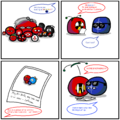
-
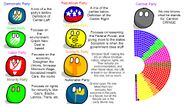 u/Kirbly11 Source
 -
'Meet the Liberals" by u/Summarizer2024
-
By File:Liqdem.png Roxxagon


(here go comics of the ideology in a slideshow style check out CyberFeminism as a example)
Portraits
-
Staswalle's drawing
-
By BeryAB
Portraits of Variants
(here go portraits of the variants of the ideology)
Portraits of Alternate Designs
(here go portraits of the alternate designs of the ideology)
Compasses
(here go compasses including the ideology check out CyberFeminism as a example)
Citations
Notes
References
- ↑ Democracy - The God that Failed, chapter 1, page 42 - "Since 1918, practically all indicators of high or rising time preferences have exhibited a systematic upward tendency: as far as government is concerned, democratic republicanism produced communism (and with this public slavery and government sponsored mass murder even in peacetime), fascism, national socialism and, lastly and most enduringly, social democracy ("liberalism")."
- ↑ The German feminist magazine Emma awarded Sexist Man Alive to FDP politicians twice, in 2020 and 2024. Emma's anti-pro-Ukrainian motivations are such that the misogynistic man award is given to a woman, Marie-Agnes Strack-Zimmermann. To put it bluntly, Emma is completely raving.
- ↑ The FDP was committed to the rights of German soldiers after World War II and called for the release of convicted World War II war criminals. The party had many right-wing conservative and nationalist members in Hesse, North Rhine-Westphalia and Lower Saxony in the early post-World War II period. The most famous member was Manteuffel, a famous general in the North African battlefield. Later, the FDP and the nationalists gradually drifted apart.
- ↑ [1]
- ↑ This meme on what happened in New Jersey
- ↑ 6.0 6.1 The Great Vaccine Debate
- ↑ [2]
- ↑ This meme
- ↑ Freedom of speech means freedom from government restrictions on speech. Not freedom from private restrictions on private property (like social media).
- ↑ [3]
- ↑ The Ideal Woman is… Whoever the F**k she wants to be.
- ↑ [4]
- ↑ [x.com/ProjectLiberal/status/1765736821667901800 (dead link)]
- ↑ No to BRICS. Yes to NATO. Milei keeps pleasantly surprising me by the day.
- ↑ Carlo Calenda declared that "on ethical issues there will be freedom of conscience for people within the party, because we have different worlds within us, there are people who come from a very deep-rooted Catholic tradition"
- ↑ a lot of members of Forza Italia (Mariastella Gelmini, Mara Carfagna, Enrico Costa ecc.) decided to go in Action.
- ↑ What's Wrong with Liberalism: Theory
- ↑ Francis Fukuyama: ‘The neoliberals went too far. Now, we need more social democratic policies’
- ↑ Contrary to popular misconception, Qin Hui does not support the small community itself. In fact, he believes that the individual rights of the citizen should begin to develop through an alliance with the small community or the big community, and both the small community and the big community are only means but not ends, and on the background of the small community being more powerful than the big community (such as the Western world at the Age of Enlightenment), it should develop through an alliance between the citizen and the big community; on the background of the big community being more powerful than the small community (such as China), quite the opposite.
- ↑ "Liberalism is often realized within a binary framework formed by conservatism on its right and socialism on its left... A society without personal rights is one that enslaves people, and in such a society, if everyone only speaks of their own personal rights, it is impossible to form a social force to break free from enslavement." - Qin Hui
- ↑ https://m.youtube.com/watch?v=mLa5aj7CKs8
- ↑ https://m.youtube.com/watch?v=p2MUJLkErMc
- ↑ "Nozick can't be described as left-liberal I guess, and a lot of my positions come from Nozick. I'm neither left-liberal nor right-socialist, and many of the positions I hold not only don't come from Blair, or even from the Socialist International, but I would say a fair bit comes from Marx." - Qin Hui
- ↑ https://www.chinesepen.org/blog/archives/131379
- ↑ https://www.douban.com/note/871057893
- ↑ Qin Hui supported Hu and Wen's policies focus on peasants, such as abolishing agricultural tax and reforming hukou system.
- ↑ I believe that Western leftist thought follows at least two distinct lines. One stems from the rationalist tendencies of the Enlightenment, represented by Voltaire, extending through Hegel, Marx, and the orthodox social democracy of the Second International (with Plekhanov and the Mensheviks as its Russian representatives) to modern social democracy. The other originates from Rousseau’s ideas, progressing through the Jacobins, the Russian Decembrists, the Russian Narodniks, and ultimately Lenin. - Qin Hui
Navigation


.png)


| Canon | File:NatProg.png Bull Moose Progressivism •  Christian Democracy • Christian Democracy •  Civic Nationalism • File:Civlibert.png Civil Libertarianism • Classical Liberalism • Conservative Liberalism • File:Georgist.png Georgism • Civic Nationalism • File:Civlibert.png Civil Libertarianism • Classical Liberalism • Conservative Liberalism • File:Georgist.png Georgism •  Girondism • File:Glib.png Green Liberalism • Girondism • File:Glib.png Green Liberalism •  Helvetic Model • File:Islamic Democracy.png Islamic Democracy • Helvetic Model • File:Islamic Democracy.png Islamic Democracy •  Jacobinism • File:Liberalconservative.png Liberal Conservatism • File:Libfem.png Liberal Feminism • Jacobinism • File:Liberalconservative.png Liberal Conservatism • File:Libfem.png Liberal Feminism •  Liberal Socialism • Liberalism • File:Liberaltarianism.png Liberaltarianism • Liberal Socialism • Liberalism • File:Liberaltarianism.png Liberaltarianism •  National Liberalism • National Liberalism •  Neoliberalism • File:Orlib.png Ordo-Liberalism • File:Radlib.png Radicalism • Reactionary Liberalism • Neoliberalism • File:Orlib.png Ordo-Liberalism • File:Radlib.png Radicalism • Reactionary Liberalism •  Reformist Marxism • File:Rockrep.png Rockefeller Republicanism • Social Democracy • Social Liberalism • Reformist Marxism • File:Rockrep.png Rockefeller Republicanism • Social Democracy • Social Liberalism •  State Liberalism • File:Steinval.png Steiner-Vallentyne School • File:Synclib.png Big Tent Liberalism • File:Neotech.png Technoliberalism • State Liberalism • File:Steinval.png Steiner-Vallentyne School • File:Synclib.png Big Tent Liberalism • File:Neotech.png Technoliberalism •  Third Way File:Third Way - alt.png Third Way File:Third Way - alt.png |
|---|---|

