

Wiki is in the process of importing stuff
Please be patient

"A spectre is haunting Europe; the spectre of Communism."

Eurocommunism, also referred to as Democratic Communism or Neocommunism, is a revisionist ideology in the 1970s and 1980s within various Western European communist parties which said they had developed a theory and practice of social transformation more relevant for Western Europe.
History
[edit]The invasion of  Czechoslovakia by the Warsaw Pact has disillusioned many Communist parties in the Western world. The result was the break from
  Soviet orthodoxy and greater commitment to
  liberal democracy in those parties.
  Eurocommunism was the most prominent in
  Italy,
  Spain, and
  France.
The ascendancy of Enrico Berlinguer during the 70s helped the File:PCI.png Italian Communist Party (PCI) gain many more seats in the national and local elections. With those gains, he negotiated a Historic Compromise with Aldo Moro, a very popular Prime Minister in the Christian Democracy (DC.) According to Berlinguer, the fall of democracy in  Chile necessitates the cooperation between the
  Marxists and the more moderate factions. With the support of DC, they would then pursue many social reforms and condemn many terrorist groups during the Years of Lead. The Compromise would continue until 1980.
Beliefs
[edit]Variants
[edit] Post-Communism
[edit]
Post-communism refers to the political, economic, and ideological transformations that emerged after the collapse of communist governments in Eastern Europe and the dissolution of the Soviet Union. Beginning in the late 1980s and early 1990s, the revolutionary upheavals that ended one-party socialist rule forced former ruling parties, opposition movements, and intellectuals to redefine their political positions. Governments and political organizations that emerged from these transitions generally abandoned orthodox Marxist-Leninist doctrine while preserving parts of the social welfare structures that had existed under state socialism. In many countries the result was a hybrid ideological environment that blended  social democracy,
  liberal socialism, and elements of
  social capitalism, often accompanied by the adoption of File:Keynes.pngKeynesian economic policies designed to stabilize economies undergoing rapid market transformation.
Politically, post-communist systems frequently adopted institutions associated with liberal democracy, including competitive elections, pluralist party systems, and civil liberties. However, these reforms occurred unevenly. Some states maintained relatively stable democratic institutions, while others developed more centralized or illiberal systems. Many reformist parties that emerged from former communist organizations rebranded themselves as center-left movements supporting File:Left Reformism.pngleft-reformism, combining market mechanisms with social protections. In Western Europe, particularly within parties influenced by the Italian Communist tradition, this reformist current was sometimes described through concepts such as migliorismo, which emphasized gradual institutional improvement rather than revolutionary change.
Economically, post-communist reforms attempted to construct mixed economies combining private markets with social protections. Governments often pursued a balance between social democracy and market liberalization, producing what observers described as social capitalism, a system in which capitalist markets operate alongside welfare states and labor protections. In many countries this transition also produced ideological currents sometimes labeled File:Leftneolib.pngleft-neoliberalism, where parties with socialist origins accepted globalization, privatization, and financial liberalization while still promoting social welfare programs. International integration became a major priority; several states aligned themselves with Western institutions and foreign policy frameworks associated with  Atlanticism, while also engaging with global economic institutions, which contributed to a broader orientation toward
  globalism.
Foreign policy positions within post-communist politics varied widely. Many governments pursued integration with Western alliances such as NATO and the European Union, reflecting Atlanticist strategic thinking. At the same time, factions within post-communist political movements opposed this alignment, producing currents of  anti-NATO sentiment rooted in historical non-alignment traditions or nationalist perspectives.
  Anti-fascism remained a powerful symbolic legacy inherited from the communist era, continuing to shape political discourse and historical memory across much of Eastern Europe. In some contexts, post-communist parties also expressed support for international movements such as
  Labour Zionism, reflecting their broader engagement with global socialist traditions.
Environmental policy became another arena of ideological development. During the transition from centralized industrial planning to market economies, governments confronted severe ecological damage inherited from heavy industry. As a result, several reformist parties incorporated File:Gsocdem.pngcenter-left environmentalism into their programs, linking ecological policy with social democratic welfare systems and industrial modernization.
Despite broad agreement on abandoning orthodox communist doctrine, post-communist politics remained internally diverse. Some factions moved further toward  democratic socialism, emphasizing strong welfare systems and expanded public ownership. Others developed positions closer to
  social liberalism, accepting market capitalism with regulatory oversight. Additional currents emerged that combined elements of state authority with social welfare systems, sometimes described as
  social authoritarianism, particularly in states where democratic institutions remained weak.
Overall, post-communism represents a complex ideological landscape shaped by the collapse of twentieth-century socialist states and the effort to construct new political systems that combine democratic governance, market economies, and social welfare protections. The resulting ideological spectrum spans reformist socialism, social democracy, and market-oriented liberalism, reflecting the diverse paths taken by societies emerging from the communist era.
Personality and Behaviour
[edit]Let's just say that he is a very nice guy but hates  capitalists.
How to Draw
[edit]- Draw a ball.,
- Fill it with red.
- Draw a circle of 12 gold stars.
- Add the eyes and you're done!
| Color Name | HEX | RGB | |
|---|---|---|---|
| Red | #ED1D26 | rgb(237, 29, 38) | |
| Gold | #FFCC00 | rgb(255, 204, 0) | |
Relationships
[edit]Proletariat
[edit] Austromarxism - Taught me all about economics.
 Reformist Marxism - Fellow democracy-loving leftist, who taught me how to achieve communism.
 Anationalism - An international language, what a great idea!
 Socialism - Power to European workers!!!
- File:Swhf.png Socialism with a Human Face - Thank you for inspiring me. Your sacrifice shall never be in vain.
- File:Nagy.png Nagyism - Like the above but he had a sadder fate.
 Liberalism - The best way to implement Communism generally
 Democracy - "The experience gained has led us to the conclusion that democracy today is not only the ground on which the class adversary is forced to retreat, but it is also the historically universal value on which to found an original socialist society." - Enrico Berlinguer
 Reformism - Not really a fan of all that "Revolution" talk my fellow Communists do...
- File:Lpop-tinfoilhat.png Left-Wing Populism - Thanks for marching alongside me during Hot Autumn
- File:Pragmat.png Pragmatism - I would rather be called a "Revisionist" than dogmatically support Authoritarianism
- File:Gorb.png Gorbachevism - The only based Soviet President


Lumpenproletariat
[edit]- File:TheLeft-EU.png The Left In the European Parliament - Least bad European Group. But you're sadly eurosceptic and not really communist at all.
 European Federalism - Son, you have the right idea of a united Europe, but completely wrong politics!!!
 Marxism - I'll make your vision a reality, knock it off with all the Revolution talk and anti-liberal non-sense
 Democratic Socialism - Almost me. But why do you criticize me for demanding communism instead of socialism through liberal democracy?
 Christian Democracy - Although you were a capitalist and our greatest opposition in Italy, we did try the Historic Compromise.
 Social Democracy - Wait, I'm confused, do you support capitalism or oppose it?
 Anarcho-Communism - Based communism, but please become more statist.
 Anarcho-Pacifism - Peace is great, but anarchy is not.
 Third Way - I am somewhat of a "Third Way" between Marxism-Leninism and Anarcho-Communism. Please reject Social Democracy and Neoliberalism though
 Titoism - Great guy, but why so authoritarian?
 National Communism - Left-Pan-Europeanism is good, but Left-Euroskepticist nationalism is not.
 Neoliberalism - I like Liberal Internationalism, not sold on Trickle-Down economics or Union Busting
 Neoconservatism - Democracy is non-negotiable, stop being such a Reactionary Capitalist sleaze though...
 Liberal Socialism - Cool, but you need to go further
 Fiscal Conservatism - "a necessary choice and, at the same time, a path to salvation for Western people [...] the working class tool to finally overcome a system that is showing its weakness, a system characterised by waste and dissipation, unbridled individualism and senseless consumerism. Austerity means responsible behaviour, efficiency and social justice." - Enrico Berlinguer
 American Model - Great ally of Europe, far too anti-Socialist for my liking
- File:Khrusch.png Khrushchevism - Too statist, but overall not Terrible for an adjacent of Marxism-Leninism


Bourgeoisie
[edit] Marxism-Leninism - You have no right to crush the self-determination of communist parties! Please stop saying I'm a revisionist sellout.
 Trotskyism - What makes you think I'm no better than him?
 Hoxhaism - I am not an anti-communist! You're just Stalinism 2.0 with bunkers!
 Pol Potism - Every Marxist-Leninist's secret fantasy.
 Capitalism - The plague of Europe.
 Fascism - A bunch of xenophobic and hateful bastards who brought nothing but pain to Europe. Still, thank you Almirante for coming to Berlinguer's funeral
 Nazism - Same as the above, but even worse.
 Korwinism - My opposite.
 Neo-Bolshevism - Don't confuse me for him!!!
 (uniting Europe under communism is pretty based tho) Gaullism - He sabotaged me from ever getting into power.
 Right-Wing Populism - Is 'EUSSR' supposed to be a prejudice? I really like that name!
 Hoppeanism - Nightmare fuel
 Dengism - The Worst elements of Communism mixed WITH Capitalism?! Just... Awful
 National Conservatism - You seem to use the terms 'Liberal' and 'Communist' interchangeably, can you not be both?


Further Information
[edit]File:Wikipedia.png Wikipedia
[edit]Literature
[edit]Altiero Spinelli
[edit]Santiago Carrillo
[edit]- Eurocommunism and the State
List of Polictial Parties
[edit]- File:PCI.png Italian Communist Party

- Communist Party of Spain

- French Communist Party

- Communist Party of Belgium

- Communist Party of the Netherlands

- Communist Party of Austria

- Communist Party of Finland

- Communist Party of Great Britain

- Communist Party of Greece-Interior

- Greek Left
- Renewing Communist Ecological Left
- Synaspismos
- Communist Party of Australia

- Romanian Socialist Party


File:YouTube.png Youtube
[edit]Channels
[edit]Gallery
[edit]Portraits
[edit]
Comics
[edit]-
-
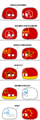
By NR34.

Navigation
[edit]


 Prefixes - You're getting a prefix, you're also getting a prefix, everyone's getting a prefix! Prefixes - You're getting a prefix, you're also getting a prefix, everyone's getting a prefix! | |
|---|---|
| Alt- | |
| Anti- | |
| Bio- | |
| Ego- | |
| Ethno- | |
| Geo- | |
| Left- | File:Left-AnEn.png Left Anti-Environmentalism • File:LeftAutho.png Left-Authoritarianism •  Left-Communism • File:Left-wingCon.png Left-Conservatism • File:L-lib.png Left-Liberalism • Left-Communism • File:Left-wingCon.png Left-Conservatism • File:L-lib.png Left-Liberalism •  Left-Libertarianism • Left-Libertarianism •  Left-Monarchism • File:LeftNatio.png Left-Nationalism • Left-Monarchism • File:LeftNatio.png Left-Nationalism •  Left-Populism • File:Left Reformism.png Left-Reformism • File:LeftRothbardianismPix.png Left-Rothbardianism • Left-Zionism Left-Populism • File:Left Reformism.png Left-Reformism • File:LeftRothbardianismPix.png Left-Rothbardianism • Left-Zionism |
| Minarcho- | |
| Neo- |  Neo-Bolshevism • File:Neocam.png Neocameralism • File:NeoClib.png Neoclassical Liberalism File:Nclib4.png • Neocommunism • Neo-Bolshevism • File:Neocam.png Neocameralism • File:NeoClib.png Neoclassical Liberalism File:Nclib4.png • Neocommunism •  Neoconservatism • Neoconservatism •  Neo-Enlightenment • Neo-Enlightenment •  Neo-Fascism • Neo-Fascism •
 Neoliberalism • Neoliberalism •  Neo-Libertarianism Neo-Libertarianism  • •  Neoluddism • Neoluddism •  Neo-Marxism • File:NeoNationalism.png Neo-Nationalism • Neo-Marxism • File:NeoNationalism.png Neo-Nationalism •  Neo-Ottomanism • Neo-Ottomanism •  Neoreactionaryism • File:Neo-Rockwellism.png Neo-Rockwellism • Neoreactionaryism • File:Neo-Rockwellism.png Neo-Rockwellism •  Neosocialism • Neosocialism •  Neo-Zapatism Neo-Zapatism |
| Paleo- | |
| Post- | |
| Right- | File:Right-Anarchism.png Right-Anarchism • File:Right-AnEn.png Right Anti-Environmentalism •  Right-Authoritarianism • Right-Authoritarianism •  Right-Conservatism • File:R-lib.png Right-Liberalism • Right-Conservatism • File:R-lib.png Right-Liberalism •  Right-Libertarianism • File:RigNatio.png Right-Nationalism • Right-Libertarianism • File:RigNatio.png Right-Nationalism •  Right-Populism • File:Right Reformism.png Right-Reformism • File:Right-volu.png Right-Voluntaryism Right-Populism • File:Right Reformism.png Right-Reformism • File:Right-volu.png Right-Voluntaryism |
| Techno | |
| Eco- | |
| Monarcho- | |
| Too many to list | |


| Canon | File:NatProg.png Bull Moose Progressivism •  Christian Democracy • Christian Democracy •  Civic Nationalism • Civic Nationalism •  Civil Libertarianism • Civil Libertarianism •  Classical Liberalism • Classical Liberalism •  Conservative Liberalism • Conservative Liberalism •  Georgism • Georgism •  Girondism • File:Glib.png Green Liberalism • Girondism • File:Glib.png Green Liberalism •  Helvetic Model • Helvetic Model •  Islamic Democracy • Islamic Democracy •  Jacobinism • File:Liberalconservative.png Liberal Conservatism • File:Libfem.png Liberal Feminism • Liberal Socialism • Jacobinism • File:Liberalconservative.png Liberal Conservatism • File:Libfem.png Liberal Feminism • Liberal Socialism •  Liberalism • Liberalism •  Liberaltarianism • Liberaltarianism •  National Liberalism • Neoliberalism • File:Orlib.png Ordo-Liberalism • File:Radlib.png Radicalism • National Liberalism • Neoliberalism • File:Orlib.png Ordo-Liberalism • File:Radlib.png Radicalism •  Reactionary Liberalism • Reactionary Liberalism •  Reformist Marxism • File:Rockrep.png Rockefeller Republicanism • Social Democracy • Social Liberalism • Reformist Marxism • File:Rockrep.png Rockefeller Republicanism • Social Democracy • Social Liberalism •  State Liberalism • File:Steinval.png Steiner-Vallentyne School • File:Synclib.png Big Tent Liberalism • State Liberalism • File:Steinval.png Steiner-Vallentyne School • File:Synclib.png Big Tent Liberalism •  Technoliberalism • Technoliberalism •  Third Way File:Third Way - alt.png Third Way File:Third Way - alt.png |
|---|---|


- ↑ https://it.m.wikipedia.org/wiki/Post_comunismo
- ↑ a lot of figures that supports DiEM25 or that are in the Advisory Panel are neo-marxists (es. Antonio Negri, Franco Berardi, Slavoj Žižek etc.), and also one of the founders (Srécko Horvat)
- ↑ "we see ourselves forced to claim within the Atlantic Pact, a pact that we do not question, Italy's right to decide its own destiny autonomously"
- ↑ https://www.repubblica.it/dossier/cultura/enrico-berlinguer-35/2019/06/10/news/enrico_berlinguer_un_giorno_gli_chiesi_ma_lei_crede_in_dio_-228448969/