

Wiki is in the process of importing stuff
Please be patient
“Revolutions begin in the best heads, and run steadily down to the populace.”
Reactionary Socialism is a  socialist,
  reactionary ideology that resides in the upper left half of the political compass.
Beliefs
The "socialism" in the name of reactionary socialism aims to redefine socialism as a system where rank is determined by ability, talent, and achievement rather than wealth, freeing the individual from economic despotism. While it aimed to resolve the social question, it isn't as class based as modern Socialism is.
Reactionary socialism as a ideology arose during the rise of capitalism in Europe after the disintegration of the old, feudal social order. Reactionary socialism criticized the individualism and competitive tendencies of capitalism and sought to set up a moral economy that subordinates profit to virtue and had each participating class in the economy play their own distinct role in upholding the common good. Socialism here was a principle of public service based on hierarchy and duty, put in stark contrast to the private commercialism of liberal Europe. It therefore encompassed the political, social, and economic dimensions of human life in equal respect.
In reaction against the trend of capitalism, reactionary socialism seeks the aid of the state in preserving or restoring the economic preeminence of  feudal economic institutions, although what specific institutions they seek to restore vary between each proponent. Most proponents of reactionary socialism sought a corporatist economy that restored the medieval guilds and the worker's right to associate, integrated into a tripartite structure where the workers receives shares of their trade and negotiates with employers for the common good. Other reactionary socialists sought to defend
  agricultural living and wanted to restructure the agrarian economy on File:Neofeudalist.png feudal and
  communitarian lines in a way similar to that desired by the File:Dist.png Distributists.
They criticized the foundational principles of  classical economic liberalism as set out by Adam Smith, those being the idea of File:Invishand.png enlightened self interest, File:Free Trade.png free trade, and File:Markets.png competitive free markets. They also criticized
  Capitalism as being focused on profit over morality and subjugating most workers to a state of wage-labour, as well as financialism such as usury. They criticize File:LibDem.png liberal democracy as being built on File:Pluto.png plutocratic interests, and see
  monarchy as a superior system based on virtue.
Historically, reactionary socialism has significant overlap with  Paternalistic Conservatism,
  Classical Conservatism, and File:ConCorp.png Conservative Corporatism, and could even be considered synonymous. Historically, it also intertwined with File:Ludd.png anti-industrial sentiment,
  romanticism, and File:EconNat.png economic nationalism.
History
In the Communist Manifesto by Karl Marx and Friedrich Engels, Reactionary Socialism was referred to as basically a form of socialism that sought to revert to feudalism, or a Clerical version of socialism. It generally sought to de-proletarianize the working class, redistribute land to the peasants, and generally return to a Medieval type economy instead of seeking total collectivism. Since then, it has been used pejoratively towards "bourgeoie" socialist systems, such as Social Democracy. Additionally, many monarchists who were opposed to capitalism called themselves socialist, even though they were feudalists. Previous spokespersons include some members of the São Paulo Forum and latin american nationalists for example Albizu Campos saw american imperialism as being tied to protestantism and the "yankee" mentality he advocated for socialism and a return to a conservative agrarian way of life. The modern spokespersons for it are Alexander Dugin, who sees socialism as the best way to enforce a traditional society, and Arthur Penty, who glorified the guild economy. Some have even referred to  Strasserism as reactionary socialism, since Strasser wanted federalization, a guild economy, and agrarianism.
 Louis de Bonald

Like de Maistre, Louis de Bonald (1754-1840) was also a reactionary philosopher. He criticized French Revolution's  centralism and
  Individualism.
He supported File:Feud.png restoration of guild system, File:Guildsoc.png workers' right to associate and  class collaboration.
In De Bonald's opinion absolute monarchy and
class collaboration.
In De Bonald's opinion absolute monarchy and  Catholic Church as key to secure domestic tranquillity, although he also desired more political decentralization and a strenghening of the nobility.
He had an ambivalent stance on Censorship, supporting bans on some books, but advocating for a more lax treatment of newspapers and promoting a "marketplace of ideas".
He also was an early critic of Adam Smith and Laissez-faire economics as he saw virtue, not material prosperity as the highest good as a nation.
File:Metternich.png Metternichism
A traditional conservative, File:Metternich.png Prince Klemens von Metternich (1773-1859) was keen to maintain the balance of power, particularly by resisting Russian territorial ambitions in Central Europe and the Ottoman Empire. He disliked liberalism and strove to prevent the breakup of the Austrian Empire, for example, by crushing nationalist revolts in Austrian northern Italy. He pursued a similar policy at home, using censorship and a wide-ranging spy network to suppress unrest.
Metternich refered to himself as a conservative socialist (socialiste conservateur) in his letters.[4] His socialism stemmed from his wish to preserve the guild economy and his support for paternalism. He also opposed economic liberalism.
He saw nationalism as a threat to the cosmopolitan nature of the empire and a threat to its stability. This would lead him to suppress nationalist sentiments in the empire and other empires like the Ottoman Empire.
File:Fitzhugh.png Fitzhughism
George Fitzhugh (1806–1881) was an American social theorist best known for his File:LeftSlavery.pngpro-slavery and reactionary views. He was a staunch defender of  Southern agrarian society and an early
  critic of classical liberalism, free-market capitalism, and individualism. Fitzhugh argued that slavery was not only beneficial but necessary for a stable and just society. His writings positioned him as one of the most radical defenders of slavery in the antebellum United States, advocating for a form of paternalistic,
  hierarchical society that rejected liberal democracy.
Beliefs and Ideology
Fitzhugh's political and economic philosophy can be described as a blend of reactionary traditionalism, authoritarian paternalism, and economic collectivism—ironically resembling elements of socialism but with a profoundly hierarchical and racially stratified foundation. He believed that free-market capitalism led to exploitation and suffering among the working class, arguing that slavery provided a more humane alternative by ensuring care and stability for the laboring population. His works, such as Sociology for the South (1854) and Cannibals All! (1857), criticized wage labor in the industrial North and compared it unfavorably to the File:FeudSoc.pngslave-based South's supposed security and social cohesion.
Fitzhugh admired aspects of European socialism, particularly its critique of laissez-faire economics and its calls for state intervention to protect workers. However, rather than advocating for worker-owned industries or state welfare, Fitzhugh argued that the Southern slave system already fulfilled socialism's promise by providing care and stability for its laborers. He saw slavery as a natural form of governance where the strong ruled over the weak for the latter’s supposed benefit. His vision extended beyond race as he believed poor whites in the North would be better off under a system of benevolent servitude as well.
File:Sombart.png Sombartism
Sombart emerged as a figure during the Wilhelmine period in Germany, a time of rapid industrialization and social transformation. He gained recognition for his critical analyses of capitalism, notably in works such as Der moderne Kapitalismus (1902–1927), in which he examined the origins, ethics, and cultural consequences of economic systems. His work often contained strong critiques of liberal capitalism, aligning with  anti-capitalism currents, and occasionally expressed skepticism of
  American economic models.
His ideas intersected with various strands of nationalist and socialist thought. For example, Sombart emphasized the moral and cultural cohesion of the Volk, reflecting File:Volk.pngvolkism, and explored the concept of a spiritually unified national community. While often accused of anti-Semitism in later readings of his work, historians debate whether these accusations fully reflect his writings or represent misinterpretations in politically charged contexts. Similarly, some critics have mistakenly linked him to Nazism, though his intellectual project predated the rise of the Third Reich and often diverged from National Socialist ideology.
Political and Social Philosophy
Sombart’s philosophy sought to reconcile traditionalist and socialist ideas. He advocated for forms of  conservative socialism and socialist corporatism, proposing economic structures that maintained social cohesion and collective welfare without fully embracing Marxist orthodoxy. His vision was influenced by the broader File:Revolutionary Conservatism.pngConservative Revolution, emphasizing national renewal, moral order, and hierarchical social structures. Within this framework, Sombart supported a merit-based allocation of social responsibilities, reflecting his belief in File:Merit.pngmeritocracy as a stabilizing force in society.
His work also engaged with historical movements such as the Silesian nationalist-socialist currents led by File:Korfanty.pngWojciech Korfanty, which combined regional autonomy, labor organization, and Catholic-inspired social reform. While Sombart did not directly participate in these movements, his ideas about corporatism and socialized economic planning resonated with contemporary efforts to integrate national identity with social welfare.
Economic Theory and Corporatism
Economically, Sombart developed a nuanced critique of unregulated capitalism. While influenced by Marxism and sympathetic to certain socialist critiques of wealth concentration, he diverged from Marxist determinism by emphasizing cultural and spiritual dimensions of economic life. His proposals for  planned corporatism involved structuring production around occupational and sectoral associations that coordinated both labor and capital interests. In this sense, he imagined an economy that was socialist in planning but embedded within a nationalist and moral framework.
Sombart’s economic thinking also displayed affinities with File:Utsoc.pngutopian socialism, particularly in his interest in morally and culturally coherent communities as a corrective to the perceived excesses of modern capitalism. Unlike Marxist revolutionaries, he did not advocate for proletarian seizure of the means of production; instead, he envisioned a guided transformation, blending state direction, corporative organization, and cultural cohesion.
Nationalism, Mysticism, and Militarism
A distinctive aspect of Sombartism is its intertwining of economic thought with nationalist and mystical elements. He frequently invoked File:Natmyst.pngnational mysticism, suggesting that economic systems and social hierarchies were shaped not merely by material forces but also by spiritual and cultural imperatives. This idea reinforced the notion of the Volk as an organic, morally unified entity, guiding both economic and social policy.
Sombart also displayed support for File:Mil.pngmilitarism, though framed in terms of national strength and social discipline rather than expansionist ideology. Military preparedness, in his view, was a mechanism to cultivate civic virtue and collective cohesion, reflecting a broader concern with the health and stability of the nation.
Reception and Controversy
Sombart’s intellectual legacy has been contested. Critics often accuse him of File:LeftAntisem.png Antianti-Semitism, though contextual analyses reveal that his positions were complex, and his work was sometimes misappropriated by far-right movements. Similarly, some mischaracterized him as a proto-Nazi, though his economic and social prescriptions diverged in important ways from  National Socialist policies, particularly regarding corporatism and the role of the state in managing social welfare.
Scholars have also debated his engagement with  Marxism. While Sombart drew heavily on Marxist analysis to critique capitalism and analyze historical economic development, he rejected deterministic and class-struggle-based conclusions, favoring instead a synthesis of
  German socialism, conservative social thought, and planned economic coordination. This made his thought attractive to diverse political actors, from reform-minded socialists to conservative intellectuals seeking an alternative to liberal capitalism.
Legacy and Influence
Sombart’s ideas influenced both academic sociology and political movements in Germany and beyond. His writings provided a framework for planned corporatism experiments in interwar Europe and informed debates within the broader Conservative Revolution about the intersection of nationalism, social welfare, and economic organization. Additionally, his explorations of the Volk and national mysticism anticipated later discussions about cultural cohesion, identity, and the moral dimensions of economics.
Personality
Reactionary Socialism is very religious (generally Catholic, can be Orthodox) and traditional, like his father. However, he gets an explosive temper from his mother, and can usually be seen telling the proletariat to revolt against the unnatural plight of capitalism. Can be depicted speaking in Middle English, holding a sword and sickle or a musket, or holding some sweet Victorian-era flags.
Variants
File:FeudSoc.png Social Feudalism
Social Feudalism is what occurs to the landed aristocracy after capitalism takes root in a country and gradually usurps power away from the gentry and gives it to the bourgeoise. The aristocrats notice this happening of course so they attempt to stop capitalism from growing through  protective trade laws, beneficial tax laws and
  opposing democratic reforms. However when these fail to stop capitalism from supplanting
  aristocrats many turn to a new solution of masking as the workers' champions who stand up to the exploitative capitalists, many claim that under File:Feud.png feudalism serfs were well-off due to their Lords' honour and noble hearts. While forgetting all the oppression that they made workers endure for millennia. The two most succesful forms of social feudalism are File:Metternich.png Metternich as he ruled over Europe from the end of the Napoleonic wars to the European Spring. The second is Young England in the UK who managed to get their president, at a time, File:Disraeli.png Benjamin Disraeli elected Prime Minister who then created File:Onenatcon.png one-nation conservatism which has remained a force in British politics to the modern day.
File:YoungEngland.png Young England
Young England was a Victorian era political group with a political message based on an idealised feudalism: an absolute monarch and a strong Established Church, with the philanthropy of noblesse oblige as the basis for its paternalistic form of social organisation.
File:Statefeud.png State Feudalism
State Feudalism refers to an economic and social arrangement in which the state exercises supreme dominion over all land and the principal means of production. It grants inheritable, non-alienable fiefs or possessions to loyal and productive citizens (whether individuals, families, or occupational fellowships) according to criteria of merit, demonstrated need, and service rendered to the nation, through a process of intensive selection.
The state functions as the supreme proprietor, bestowing conditional tenure that binds the holder to the holding in a hereditary yet revocable manner: the fief cannot be sold, mortgaged, or alienated at pleasure, and its enjoyment depends upon faithful stewardship. In return, the possessor is obliged to work the land or enterprise productively.
Society organises itself organically around these holdings. Corporate bodies such as guilds for craftsmen, fellowships in industry, and councils among peasants regulate their respective spheres, setting standards, training successors, and moderating competition, all under the overarching coordination of the state.
How To Draw
Reactionary Socialism's design is based on the combination of the Jerusalem cross (a symbol used for reactionaryism within Polcompball) on the red background (to symbolize socialism).
- Draw a ball.
- Color it in with red
- Draw a yellow/buff Jerusalem Cross (without the tiny crosses) inside a yellow/buff circle.
- Draw the eyes.
- (Optional) Draw a knight's helmet on top of the ball, similar to the one Feudalism wears.
- (Optional) Draw a sword and sickle as props, preferably in a similar position to
 the hammer and sickle logo.
 - You're done!

| Color Name | HEX | RGB | |
|---|---|---|---|
| Red | #DA141E | rgb(218, 20, 30) | |
| Yellow | #FFE74C | rgb(255, 231, 76) | |
Relationships
Blessed and charitable
 Monarcho-Distributism - The best system for ruling the realm.
 Socialist Corporatism - Combining this with the above is basically perfection.
 Traditionalism - "Traditionalism is the most revolutionary ideal of our times", fully agree!
 Agrarian Socialism - Farmland distribution? Count me in!
 Imperialism - Unlike most other socialists, I see nothing wrong with you.
- File:ReactCosmo.png Cosmopolitanism - Nationalism would pose a threat to the cosmopolitan nature of the empire.
- File:Populare.png Populareism - An early version of me.
- File:Crusadism.png Crusadism - Deus vult!
- File:Mladorossi.png Mladorossism - Tsarism and socialism? I love thou, although thou might have been a creation of Bolsheviks...
 Monarcho-Socialism - Same as above but more straightforward.
- File:Statesoc.png State Socialism - A crucial tool to eliminate dissenters.
 Gerontocracy - The wisdom of the elders shall be passed down from generation to generation.
 Christian Theocracy - It goes without saying, BLESSED!
 Caste System - A blessed system that guarded the poor masses and ensured generosity from the top.
 Ethnocacerism - Also a very blessed non-Christian socialist ideology. The Incan Empire was a great example of Bronze Age feudal socialism put into practice.
 Christian Socialism - Religion and socialism? Blessed!
 Conservative Socialism - Blessed! Many of my variants are literally you!
- File:Paleosocialism.png Paleosocialism - Even more blessed then the above.
- File:Lysnoir.png Lys Noir - You are me, if I was an anarchist..
- File:Utsoc.png Utopian Socialism - I am basically a form of you.
 Counter-Enlightenment - Thy ideas are very good, and
  romanticism is even better.
- File:Guildsoc.png Guild Socialism - Thou also appreciates romanticism like the above, and many of my followers were admirers of the guild system.
- File:Disraeli.png Disraelism - I have taught thou well, Disraeli.


Weary
 Socialism - Socialism is my ideological end goal. However, Metternich suppressing the 1848 revolutions is an obvious exception.
- File:Fabian.png Fabian Socialism - Kinda blessed, but why get rid of the poor when they can be used to work to enrich the realm?
 Pol Potism - This man gets me. Well, sort of. We can never agree about monarchial rule.
 He's too insane even for me Strasserism - Socialist and traditionalist just like me. However, many of my variants aren’t ok with your anti-semitism so maybe tone it down??
 National Bolshevism - Thou hath some good ideas but thou want central control rather than feudal delegation.
 Nationalism is a product of the enlightenment Marxism - Thou art very strange. On one hand, thou appreciates me, calling me the “asiatic mode of production,” and Engels called Florian Geyer a communist revolutionary. Also, I appreciate ultrasocialism. But thou hast gone out of thine way to needlessly lambast Metternich.
 Marxism–Leninism - Most of thy adherents are queerly progressives who think that traditionalism is bad! However, Stalin’s industrialization and autarky were good and transformed Russia to its very core.
 Juche - Thou art pretty cool but why are thou so afraid to embrace thy monarchist nature?
- File:Esosoc.png Esoteric Socialism - The Freemasons are a vile Satanic group, thou shall pay for defiling the good name of the honorable Knights Templar. A pox upon thou!
(Your economics are great, as is your style of rule. If thou hath used my example as a model, thou would be my best friend! Oh, wait, we have File:Eot.png synthesis.) - File:Distributist.png Distributism - My much more moderate counterpart. Get more reactionary.
 Manosphere - Sexual Marxism sounds interesting... but none of my followers are quite prepared to adopt your views all at once.
 Neoluddism - If we are talking about social feudalism, then I agree with thou. However, Katasonov is definitely pro-industrialism.
 Paternalistic Conservatism - Just become a bit more radical, and join me!
 Longism - Same as above but an American. HAIL THE KINGFISH!!!
- File:DeGaulle.png Gaullism - Thou art pretty blessed for a Anti-Socialist Liberal Cuckservative pretty much a French version of the above.
 Welfare Chauvinism - Thou art too soft economically and thou art is a nationalist.
- File:SocCred.png Social Credit - Also hates
 usurers and advocates for a more Christian society, but he does not go far enough in the redistribution of the means of production.
  Korwinism - Get rid of the cursed capitalism and thou shall be blessed!
- File:Feud.png Feudalism - Social feudalism sounds blessed, and Young England had some interesting ideas, but nowadays I am more focused on maintaining sacred traditionalist values than returning to feudalism.
- File:Pirat.png Hydrarchy - Wanna go plunder the Spanish Armada?
What? They hired thou to attack us?  Mercantilism - Conquering weaker nations and subjugating them is blessed, but monopoly corporations are not.
- File:Krater.png Kraterocracy - Does not seem to understand the value of helping the poor. We can be stronger and subjugate others more efficiently if we're unified. "Rule of the strong" should be large-scale.
 Reactionary Liberalism - Blessed but champions the very economic system responsible for bringing the things into the world that we oppose. Maybe he'll see that socialism is the key to what he wants.
- File:Hind.png Hindu Theocracy - The caste system rocked! It's a shame it eventually failed though.
Wish we could implement something like that in modern-day Europe. - File:StateOO.png State Oriental Orthodoxy - Christian theocracy, but too capitalist. Maybe if we conquered thou, civilized thou, introduced socialism, and made thou part of the Realm... (oh wait, File:Mengistu Mariam.png socialism was introduced to thee, shame they were godless Marxists and not my variant)
- File:AuthCon2.png Authoritarian Conservatism - We used to cooperate in Austria for a while and made a promising
 collaboration in Russia. If only he understood that socialist economics is the key to preserving tradition, he would be perfect.
  Integralism - Same as File:AuthCon2.png him, please acknowledge that some forms of socialism are actually compatible with the Bible.
 Neoreactionaryism - Some of you like Giovanni Dannato is blessed, but others... Must stay in hell or in void.
- File:Hmind.png Hive-Mind Collectivism - We are people, not ants! But your existance proves, how we need to serve the God.
- File:Cosmic.png Cosmicism - Anglo-Saxon aristocratic quasi-socialism sounds good, but why ist thou an atheist nihilist?
 Esoteric Fascism - Yemelyanov was based, but heathen Paganism combined with nationalism is still disgusting.


Decadent swine
 Italian Left Communism - Lazy fool, thou art. We both share a hatred for bourgeoisie democracy, nationalism, and liberalism, though.
 Trotskyism - A secular progressive republican hostile to aristocracy, monarchy, peasantry and Christianity? My opposite on the left spectre. At least we both oppose bourgeoisie and nationalism.
 Leninism - Same as above, minus the hostility to peasants.
 Maoism - Egads, there's more of them?
 Why do the right-wing tridemists accuse thou of being me? Dengism - WTF?! At least these two are actual socialists. Jiang supported aristocracy but persecuted Confucian, Xi support Confucianism but persecut aristocratic, why not support both?
 But Katasonov likes you.-
 Because Confucian supported meritocracy which contradictory with aristocracy.

 Libertarian Socialism - An order without monarchs, estates or civil service is no order, but chaos.
- File:Radlib.png Radicalism - Thou promotes too much change all at once. I think it better if I stay in charge.
Stay back you filthy peasants!  Anarchism - Thou make me want to blaspheme, thou absolute heathen scum!
 Odalism - Interesting guy, basically me if I were an anprim. Hath got a lot of good ideas but doesn't understand that the feudal age was our high point and the Age of Discovery proves that.
 Wait, thou art a disgusting pagan? Also Katasonov hates nearly every part of your ideology. Capitalism - Ew. Do I hath to say more?
- File:Pinochet-hat.png Pinochetism - Thou art dropping the wrong people out of helicopters. And thou art a capitalist.
 Alt-Right - Thou art like a neutered
  Nazi, fearful and timid. Cowardly scoundrels, the lot of thou!
 Alt-Lite - Thou art an even bigger coward than thy friend. Thou art fearful of thy own shadow.
 Jacobinism - I absolutely abhor thee!
 Progressivism - Progression is the absolute opposite of what socialism should bring about.
- File:Reactlib-icon.png Reactionary Libertarianism - And usury is the absolute opposite of what reactionaryism should bring about.
 Revolutionary Progressivism - Thou shalt share the fate of the Jacobins if I hath anything to say about it!
 Liberalism - Thou bringest mischief whersoever thou goest.
 Civic Nationalism &
  National Liberalism - Liberal AND nationalist?? Looks like I will hath to spy on and suppress thou.
- File:Enlightenment.png Enlightenment Thought - Wretched Enlightenment, the brain of the bourgeoise.
 Classical Liberalism - Literally File:Enlightenment.png him in the sphere of economics. When shall thou die?!
 Neoliberalism - Capitalists trying to push a failed ideology! Feudalism is human nature, thou fools!
- File:Pinkcap.png Pink Capitalism - Progression? Capitalism? Absolutely REVOLTING!
 State Liberalism - MY POLAR OPPOSITE! I WILL HAVE YOU HUNG, DRAWN AND QUARTERED!
- File:NeoEnl.png Neo-Enlightenment - Damn degenerate, I am glad, that you are dead.
Were you ever alive though, or you were a corpse, fueled by avarice and unholy liquids?  Corporatocracy - Capitalist, degenerate, run by the godless, thy wicked ways make me want to blaspheme! Begone, a foul plague on western civilization!
 Kleptocracy - Art thou not just him again?
 But File:Zuma.png Jacob Zuma is quite blessed despite not being perfect.- File:Ford.png Fordism - The epitome of degeneracy and capitalism! Perish in Gehennah!
- File:Satan.png Satanic Theocracy - BURN THE WITCH AT THE STAKE!!!
- File:PagTheo.png Pagan Theocracy - BURN THE WITCH AT THE STAKE!!!
- File:Pacfem-1.png Pacifist Feminism - BURN THE WITCH AT THE STAKE!!!
- File:Libfem.png Liberal Feminism - BURN THE WITCH AT THE STAKE!!!
Noticing a pattern here? - File:StateathFedora.png State Atheism - No, I am not going to burn thee at the stake. I hath special plans for heretics like thou.
 Islamic Theocracy - I'm sorry, but anyone who ever learned how to fix a bathroom from a Muslim should call himself a barbarian.
 At least we both hate usury and Katasonov seems to admire islamic capitalism. I'm sorry, but someone who even learned to bathe from Muslims should call himself a barbarian.
  No, I washed!
 Jihadism - Art thou not just that heathen again?
 Islamic Democracy - Barbarians, democracy, thou art almost as bad as that thing.
- File:Islaman.png Islamic Anarchism - Anarchism? Barbarianism? Just pure wretched filth.
 Neoconservatism - Cuckservatives who hate socialism and tradition. Thee war on terror had the chance to be blessed, but thou corrupted the West's best opportunity at a crusade in centuries.
- File:Libhawk.png Liberal Hawkism - At least thou admit your no conservative unlike thee above.
- File:Falgsc.png Fully Automated Luxury Gay Space Communism - Satanic hedonistic robot sodomite. One of the worst ideologies imaginable. And we have him to thank for it. The very existence of this is blasphemy against all that is good and Godly.
- File:Falgsl.png Fully Automated Gay Space Liberalism - Thee above but somehow worse. Thou make this thing look good somehow.
- File:Hcon.png Homoconservatism, File:Conbertf.png Libertarian Conservatism,
 Conservative Liberalism and
  Liberal Conservatism - Yes, thou crapitalist cuckservative, I am the regressive left that wants to hang thou.
 - Financialism - DOWN WITH USURY!


Further Information
Wikipedia
People
- File:Metternich.png Klemens von Metternich
- Louis de Bonald
- File:Fitzhugh.png George Fitzhugh
- Pedro Albizu Campos
Articles
Literature
- Prussian Socialism by File:PrusSoc.png Oswald Spengler
- German Socialism by File:Sombart.png Werner Sombart
- Unto This Last by File:Ruskin icon.png John Ruskin
- Sociology of the South by File:Fitzhugh.png George Fitzhugh
Videos
Citations
- ↑ Just join the PCB Discord server (if you have already joined it) and look at Cream Man's messages,
you won't regret it. - ↑ De Bonald worked to reverse the Le Chapelier Law, which forbade workers the right to form workers' associations and prohibited strike actions, and reintroduce guilds, but his efforts were unsuccessful.
- ↑ Disraeli was the leader of Young England
- ↑ "Klemens von Metternich to François Guizot, 15 June 1847, in Richard von Metternich, ed., Mémoires, documents et écrits divers laissés par le prince de Metternich, chancelier de cour et d'état, vol. 7 (Paris: E. Plon et Cie, 1883), p. 402. See also Peter Viereck, “New Views on Metternich,” The Review of Politics 13, no. 2 (1951): 211–28, http://www.jstor.org/stable/1404765.
Gallery
-
Credit: u/Internetfunnyman1000, Source
-
 Credit: Based And Jedpilled
 -
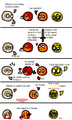 Credit: u/Borisyukishvili, Source
 -
Old Drawing for Reactionary Socialism
-
Conservative Revolution


Navigation


| Main Ideologies |  Cultism • File:Lawson.png Lawsonomy • Cultism • File:Lawson.png Lawsonomy •  Reactionarism • Reactionarism •  Reactionary Liberalism • File:Reactmod.png Reactionary Modernism • Reactionary Liberalism • File:Reactmod.png Reactionary Modernism •  Reactionary Socialism • Reactionary Socialism •  Religious Anarchism • File:Relfem.png Religious Feminism • Religious Anarchism • File:Relfem.png Religious Feminism •  Religious Nationalism File:Relnat-alt.png • File:Relreject.png Religious Rejectionism • Religious Nationalism File:Relnat-alt.png • File:Relreject.png Religious Rejectionism •  Religious Socialism Religious Socialism
| ||||||||||||
|---|---|---|---|---|---|---|---|---|---|---|---|---|---|
| Variants |
| ||||||||||||


| Main Ideologies |  Black Hundredism • Black Hundredism •  Brazilian Integralism • Brazilian Integralism •  Carlism • Carlism •  Counter-Enlightenment • File:Feud.png Feudalism • Counter-Enlightenment • File:Feud.png Feudalism •  Fourth Theory • Fourth Theory •  Hindutva • File:Integral Nationalism.png Integral Nationalism • Hindutva • File:Integral Nationalism.png Integral Nationalism •  Jihadism • Jihadism •  Khomeinism • Khomeinism •
 Legionarism • Legionarism •  National Anarchism • File:Ottoman.png Neo-Ottomanism • National Anarchism • File:Ottoman.png Neo-Ottomanism •  Neoreactionarism • Reactionaryism • File:Reactlib-icon.png Reactionary Libertarianism • Reactionary Liberalism • Neoreactionarism • Reactionaryism • File:Reactlib-icon.png Reactionary Libertarianism • Reactionary Liberalism •  Reactionary Modernism • Reactionary Socialism • Reactionary Modernism • Reactionary Socialism •  Yellow Socialism Yellow Socialism | ||||||
|---|---|---|---|---|---|---|---|
| Variants |
| ||||||
| Canon |  Acid Communism • Acid Communism •  Agrarian Socialism Agrarian Socialism  Alter-Globalism • Alter-Globalism •  Anarcho-Collectivism • Anarcho-Collectivism •  Anarcho-Communism • Anarcho-Communism •  Anarcho-Pacifism • Anarcho-Pacifism •  Anarcho-Syndicalism • Anarcho-Syndicalism •  Anationalism • Anationalism •  Anti-Fascism • Anti-Fascism •  Autonomism • Autonomism •  Barracks Communism • Barracks Communism •  Circulus Theory • Circulus Theory •  Classical Social Democracy • Classical Social Democracy •  Communization Theory • Conservative Socialism File:Red Tory.png File:French RepublicanLeft LFI Party.png • File:Councom.png Council Communism • File:Cybercom.png Cybercommunism • Communization Theory • Conservative Socialism File:Red Tory.png File:French RepublicanLeft LFI Party.png • File:Councom.png Council Communism • File:Cybercom.png Cybercommunism •  Democratic Socialism Democratic Socialism  • •  Eco-Anarchism • Eco-Anarchism •  Eco-Socialism • Eco-Socialism •  Ego-Communism • Ego-Communism •  Ergatocracy • File:GeoSynd.png Geosyndicalism • File:Greensynd.png Green Syndicalism • File:Guildsoc.png Guild Socialism • File:Impossible.png Impossibilism • Ergatocracy • File:GeoSynd.png Geosyndicalism • File:Greensynd.png Green Syndicalism • File:Guildsoc.png Guild Socialism • File:Impossible.png Impossibilism •  Independence Anarchism • Independence Anarchism •  Ismism • Ismism •  Italian Left Communism • Italian Left Communism •  Left-Wing Market Anarchism • Left-Wing Market Anarchism •  Left-Wing Nationalism • Left-Wing Nationalism •  Left-Wing Populism • Left-Wing Populism •  Leninism • Leninism •  Liberal Socialism • Liberal Socialism •  Libertarian Municipalism • Libertarian Municipalism •  Libertarian Socialism • Libertarian Socialism •  Maoism • Maoism •  Market Socialism • Marxism • Market Socialism • Marxism •  Marxism–Leninism Marxism–Leninism  • •  Marxism–Leninism–Maoism File:MLM-Alt.png • Marxism–Leninism–Maoism File:MLM-Alt.png •  Marxist Feminism • File:Minsocf.png Minarcho-Socialism • Marxist Feminism • File:Minsocf.png Minarcho-Socialism •  Monarcho-Socialism • Monarcho-Socialism •  Monarcho-Syndicalism • Monarcho-Syndicalism •  Mutualism • National Anarchism • Mutualism • National Anarchism •  National Bolshevism • National Bolshevism •  National Communism National Communism  • File:Sorelia.png National Syndicalism • File:Neomarx.png Neo-Marxism • File:Partip.png Participism • File:Platformism.png Platformism • • File:Sorelia.png National Syndicalism • File:Neomarx.png Neo-Marxism • File:Partip.png Participism • File:Platformism.png Platformism •  Posadism • Posadism •  Queer Anarchism • Reactionary Socialism File:Reactionary Socialism.png • Queer Anarchism • Reactionary Socialism File:Reactionary Socialism.png •  Reformist Marxism • Religious Socialism • Reformist Marxism • Religious Socialism •  Revolutionary Progressivism • File:Ricardosoc.png Ricardian Socialism • File:Situ.png Situationism • File:Socan2.png Social Anarchism • Socialism • File:Soc21.png Socialism of the 21st Century • File:Soctrans.png Socialist Transhumanism • File:Statesoc.png State Socialism • Strasserism • Revolutionary Progressivism • File:Ricardosoc.png Ricardian Socialism • File:Situ.png Situationism • File:Socan2.png Social Anarchism • Socialism • File:Soc21.png Socialism of the 21st Century • File:Soctrans.png Socialist Transhumanism • File:Statesoc.png State Socialism • Strasserism •  Syndicalism • Syndicalism •  Synthesis Anarchism • File:Totlib.png Total Liberationism File:Vegarch.png • Synthesis Anarchism • File:Totlib.png Total Liberationism File:Vegarch.png •  Trotskyism • File:Utsoc.png Utopian Socialism • File:Xenofeminism.png Xenofeminism Trotskyism • File:Utsoc.png Utopian Socialism • File:Xenofeminism.png Xenofeminism | ||
|---|---|---|---|
| Regional |  African Socialism • African Socialism •  Arab Socialism • Arab Socialism •  Austromarxism • Austromarxism •  Ba'athism • Ba'athism •  Babouvism • File:Lysnoir.png Black Lilyism • Babouvism • File:Lysnoir.png Black Lilyism •  Blanquism • Blanquism •  Bolivarianism • Bolivarianism •  Buddhist Socialism • Buddhist Socialism •  Bundism • Bundism •  Chavismo • Chavismo •  Christian Socialism • File:Crusade of Romanianism.png Crusade of Romanianism • File:Deleon.png De Leonism • Christian Socialism • File:Crusade of Romanianism.png Crusade of Romanianism • File:Deleon.png De Leonism •  Democratic Confederalism • Democratic Confederalism •  Dengism • File:TLeveller.png Diggerism • Dengism • File:TLeveller.png Diggerism •  Ethnocacerism • File:Eurocom.png Eurocommunism • File:Euskadi Carlism.png Euskadi Carlism • File:Fabian.png Fabian Socialism • File:Frankfurt.png Frankfurt School • Ethnocacerism • File:Eurocom.png Eurocommunism • File:Euskadi Carlism.png Euskadi Carlism • File:Fabian.png Fabian Socialism • File:Frankfurt.png Frankfurt School •  Gaddafism • Gaddafism •  Gandhian Socialism • Gandhian Socialism •  Guevarism • Guevarism •  Hoxhaism • Hoxhaism •  Ho Chi Minh Thought • Ho Chi Minh Thought •  Islamic Socialism • Islamic Socialism •  Juche • File:Khrusch.png Khrushchevism • Juche • File:Khrusch.png Khrushchevism •  Labour Zionism • Labour Zionism •  Liberation Theology • File:Libpos.png Libertarian Possibilism • File:Makhaevism.png Machajskism • Liberation Theology • File:Libpos.png Libertarian Possibilism • File:Makhaevism.png Machajskism •  Mao-Spontex • Mao-Spontex •  Maoism–Third Worldism • File:Mariateguism.png Mariateguism • File:Mladorossi.png Mladorossism • Maoism–Third Worldism • File:Mariateguism.png Mariateguism • File:Mladorossi.png Mladorossism •  Neosocialism • Neosocialism •  Neozapatismo • Neozapatismo •  Pol Potism • File:Prout.png Proutism • File:Sewersoc.png Sewer Socialism • File:Tito.png Titoism • Pol Potism • File:Prout.png Proutism • File:Sewersoc.png Sewer Socialism • File:Tito.png Titoism •  Tridemism Tridemism  • File:Vperedist.png Vperedism • Yellow Socialism • File:Vperedist.png Vperedism • Yellow Socialism | ||
| Fictional | |||
| Variants |
| ||


