

Wiki is in the process of importing stuff
Please be patient
"I can assure you that my first and foremost interest is my country."
"We fought them when they sought to dismember the nation. Is this why I should seek exoneration?"
National Communism is an Authoritarian left, culturally moderate, and nationalist ideology that believes that marxism can be combined with nationalism which is mostly inspired by  Marxism–Leninism. National Communism believes that class consciousness is best achieved through a shared national identity, as the capitalist tendency of "spatial planning" results in it being imperialist and/or globalist. Thus, the strong promotion of sovereignty will allow the workers of a nation to unite unaffected by capitalistic powers.
He is different from  National Bolshevism as he is more culturally moderate or left leaning, He also does not advocate for exclusivist supremacy and is more willing to develop towards communism than being fine with Bolshevik state control. However, he tends to be far less tolerant of perceived "deviant" behavior than ML. He just loathes how his "Tankie" father advocates for File:Internat.png internationalism and insists he was the one who was truly dominant in the Cold War given the nationalistic and anti-colonialist tendencies of politicians like
  Castro.
History
[edit] Kazakhstan
[edit]
WIP
 Poland File:Jaruzelski-2.png
[edit]
File:Jaruzelski-2.png Wojciech Jaruzelski was a Polish communist general who ruled the country from 1981 to 1990. One of the initiators of the introduction of martial law, which operated in 1981-1983, during which the military-police apparatus suppressed the protests of the Polish anti-communist opposition in order to prevent a possible invasion by the Soviet Union. In 1989, under the pressure of protests, he started negotiations with "Solidarity" and the Catholic Church, the so-called "Round Table", after the election of the President of Poland in 1990 and the victory of dissident Lech Walesa, he resigned. He planned to introduce partial political freedoms in Poland and to move from a planned to a market economy (On this occasion, he met with David Rockefeller and Zbigniew Brzezinski in New York in 1985)
 Hungary File:Nagy.png
[edit]
WIP
 Romania File:NicolaeCeaușescu.png
[edit]
File:NicolaeCeaușescu.png Ceaușescuism: Nicolae Ceaușescu was the communist dictator of Romania from 1965-1989. His refusal to participate in the invasion of Czechoslovakia and his speech condemning the invasion in 1968 skyrocketed him to popularity in his own country and with western nations abroad. This set a pattern of a very anti-Soviet foreign policy for the rest of his reign. Ceaușescu took heavy inspiration from  Maoism and
  Juche, Kim-Il Sung's grandiose parades and personality cult inspiring him to put on similar showcases back home in Romania. He developed one of the most pervasive personality cults in the Eastern Bloc, so much so that many observers remarked that it was the closest thing to an old-style functioning
  Stalinist regime, with the secret police (Securitate) monitoring every aspect of life and violently repressing any dissent against his regime. He also allocated funds to huge national monuments dedicated to himself, the most famous being the Palace of Parliament, which is the largest palace in the world and remains unfinished to this day.
Ceaușescu refused to liberalize during the period of glasnost and perestroika, and was very displeased when other members of the Warsaw Pact began reforming as well. He was referred to as "The Romanian Fuhrer" by Gorbachev. His reign of terror would eventually come to an end during the Romanian Revolution of 1989, where him and his wife Elena Ceaușescu were put on trial and executed by firing squad on national television.
 Moldova
[edit]
WIP
 Yugoslavia File:Rankovic.png
[edit]File:Rankovic.png Rankovićism: Alexandar Ranković was a Serbian communist who worked as head of the ministry of interior, helping Tito purge Stalinists following the Yugo-Soviet Split. He also led a reign of terror against Albanians in Kosovo, favoring Serb dominance over Yugoslavia, while rejecting recognition of Bosnian identity and wanting centralization of Yugoslavia. Eventually, he was fired from his position after being accused of wiretapping Tito's office. Ranković's policies heavily influenced File:Milosevic.png Slobodan Milošević.
 Titoism could also be seen as a type of Natcom, but unlike Rankovićism, it is
  Pan-Slavic rather than Serb supremacist.
 Czechoslovakia File:Husak.png
[edit]
WIP
 Bulgaria File:TodorZhivkov.png
[edit]
Todor Hristov Zhivkov was a Bulgarian communist dictator of the People's Republic of Bulgaria from 1954 until 1989 as General Secretary of the Bulgarian Communist Party. He was the second longest-serving leader in the Eastern Bloc, the longest-serving leader within the Warsaw Pact and the longest-serving non-royal ruler in Bulgarian history.
He became First Secretary of the Bulgarian Communist Party in 1954 (General Secretary from April 1981), served as Prime Minister from 1962 to 1971 and from 1971 onwards as Chairman of the State Council, concurrently with his post as First Secretary. He remained in these positions for 35 years until 1989, thus becoming the longest-serving leader of any European Eastern Bloc nation, and one of the longest ruling non-royal leaders in modern history. His rule marked a period of unprecedented political and economic stability for Bulgaria, marked both by complete submission of Bulgaria to the Soviet Union and a desire to expand ties with the West. His rule remained unchallenged until the deterioration of East–West relations in the 1980s, when a stagnating economic situation, a worsening international image and growing careerism and corruption in the BCP weakened his position. He resigned on 10 November 1989, under pressure by senior BCP members due to his refusal to recognize problems and deal with public protests. Within a month of Zhivkov's ousting, communist rule in Bulgaria had effectively ended, and within a year the People's Republic of Bulgaria had formally ceased to exist.
 Sweden File:Flyg.png
[edit]
During the early 20th century a politician by the name of File:Flyg.png Nils Flyg would lead one of Sweden's most prominent  Socialist parties. Flyg was greatly influenced by
  Lenin and was a staunch communist. However, when Stalin took control of the USSR his political leanings would change. His radical opposition to Stalin's Soviet Union and
  Britain's Imperialism would lead him to sympathise with
  Hitler. He saw the nazis as a great opposition to Stalin, Britain and the League of Nations. It is speculated that he also supported the nazis for the economic incentive as his party would begin to recieve funding from Germany.
Prior to 1959, Cuba was ruled by  Batista, an
  authoritarian capitalist dictator. From 1959-1960, Fidel Castro and other revolutionaries started the Cuban Revolution and overthrew Batista. Fidel Castro was made the new leader of Cuba. In 1961, the
  United States attempted to overthrow Castro but failed miserably in the Bay of Pigs Invasion, causing them to start using undercover operations to try and kill Castro. In 1962, the United States discovered Soviet missiles in Cuba and thus began the Cuban Missile Crisis. The United States said these missiles were illegal and violated international law, though this was hypocritical as they had stationed missiles in Turkey. After the Cuban Missile Crisis ended a week after it started, the US would keep trying to assassinate Castro up until his death in 2016 by natural causes. During the Cuban Missile Crisis, Castro reportedly asked File:Khrusch.png Khrushchev to launch nukes to strike the USA, which can be seen as a form of
  Posadism.

W.I.P
Indonesia
[edit]File:TanMalaka.png Malakaism
[edit]Ibrahim Simabua Datuak (posthumous) Sutan Malaka also known as Tan Malaka (2 June 1897 – 21 February 1949) was an Indonesian statesman, teacher, Marxist, philosopher, founder of Struggle Union (Persatuan Perjuangan) and Murba Party, independent guerrilla and spy, Indonesian fighter, and national hero. Tempo credited him as "Father of the Republic of Indonesia" (Indonesian: Bapak Republik Indonesia).
Tan Malaka argued strongly that Marxism and  Islam were compatible, and that, in Indonesia, revolution should be built upon both. Thus, he was a strong supporter of the PKI's continued alliance with Sarekat Islam (SI), and was troubled when, while he was in exile, the PKI broke away from SI. On an international scale, Tan Malaka also saw Islam as holding the potential for unifying the working classes in vast parts of North Africa, the Middle East, and South Asia against
  imperialism and capitalism. This position put him in opposition to many European Communists and the leadership of Comintern, who saw religious belief as a hindrance to a proletarian revolution and a tool of the ruling class. He became a trotskyist later during National Revolution and founded Murba party to oppose PKI influence strongly.
Malaka described  Nietzsche's, File:Rousseau.pngRousseau's, and Marx-Engels' thoughts as thesis, antithesis, and synthesis respectively; while he described File:Hegel.pngHegel–Hindenburg–Stinnes', Danton–Robespierre–Marat's, and the Bolsheviks' thoughts as genesis, negation, and the negation of negation respectively.
According to Harry A. Poeze, Malaka assumed that the colonial government used the educational system to produce educated indigenous people who would repress their own people. Malaka founded Sekolah Sarekat Islam to rival the government schools. Syaifudin writes that Malaka had four different methods of teaching: dialog, jembatan keledai (mnemonics), critical discussion, and sociodrama. In dialog method, Malaka used two-way communication while teaching. During his time teaching in Deli, he encouraged students to criticize their teacher, or the Dutchman, who was often wrong. In the SI school, he entrusted students who received higher grades to teach students with lower grades. Jembatan keledai was inspired by al-Ghazali; in addition to memorizing knowledge, the students were instructed to understand and apply it to their daily lives. Syaifudin writes that it is the opposite of bank style concept, and that it is similar to contextual teaching and learning. On critical discussion, Malaka not only verbally gave a problem to the students, but attempted to expose the problem directly, a method is similar to the problem-posing method of Paulo Freire. With his fourth method, sociodrama, Malaka aimed to make the students understand social problems and resolve them through role playing, and to provide entertainment to amuse the students after studying
 South Yemen File:YSP.png
[edit]The File:YemenSoc.png Yemeni Socialist Party government attempted to address these challenges through a series of Soviet-style development plans, which focused on industrialization, land reform, and the expansion of  social services. However, these plans were hampered by poor planning,
  ,corruption, and the lack of financial resources. The country's economy struggled, and living standards remained low.
In addition to economic challenges, South Yemen faced political instability and internal conflict. The YSP was the File:UniParti.png only legal political party, and dissent was suppressed. There were several uprisings against the government, including a 1967 coup attempt and a 1971 civil war, which was fought between factions of the YSP. The government was also involved in a series of border disputes and conflicts with neighboring countries, including  Oman and
  Saudi Arabia
Despite these challenges, South Yemen remained a key player in the Arab world due to its close ties to the  Soviet Union. The country received significant economic and military assistance from the Soviet Union and other socialist countries, and it played a role in various regional conflicts, including the Arab-Israeli conflict and the Iran-Iraq War. However, as the Cold War came to an end and the Soviet Union collapsed, South Yemen's position became increasingly precarious. The country's economy deteriorated further, and it became increasingly isolated internationally. In 1990, North and South Yemen united to form the Republic of Yemen. The unification process was led by
  President Ali Abdullah Saleh of
  North Yemen and Ali Salem al-Beidh, the secretary-general of the YSP in
  South Yemen. The two sides agreed to establish a federal system, with a central government responsible for foreign affairs and defense and regional governments responsible for local affairs. However, the process of unification was difficult, with deep-rooted differences between the two regions and suspicions on both sides. The YSP, which had ruled South Yemen, was effectively dismantled, and many southerners felt that the northern-dominated government was imposing its will on the south. This led to a rise in separatist sentiment and the emergence of movements advocating for greater autonomy or even outright separation. The separatist movement gained momentum in the 2000s and eventually culminated in the civil war in 2015.
Personality
[edit]He is almost like Marxism-Leninism but holds onto the social views of some 20th century ML movements, in that he's pro-nationalism as an ultimate long-term and not a short-term goal, while also not as culturally progressive as Marxism Leninism (though he is usually somewhat culturally left). This causes him to also butt heads with people confusing him for  Strasserism or Nazbol as he is still generally anti-fascist even if he's more open to a tactical alliance than ML.
Will argue with Marxism-Leninism about him being the true embodiment of 20th century Communism, while still maintaining respect for him. Otherwise hangs out with the other cultural center and economically left-wing gang, though is not averse to discussing theory and strategy with extreme nationalist figures.
How to Draw
[edit]The flag of National Communism is a palette swap of the Marxist-Leninist flag.
- Draw a ball with eyes
- Fill it with a black
- Draw a Red hammer and sickle on it
- (optional) Like with ML, draw an ushanka with a star
You are done!
| Color Name | HEX | RGB | |
|---|---|---|---|
| Black | #141414 | rgb(20, 20, 20) | |
Relationships
[edit]Patriotic Proletarians
[edit] Protectionism - Protecting local industry from foreign corruption is based.
 Socialism - Solidarity! Some of your internationalist brothers should stop hating on nationalism though.
 Conservative Socialism - I'm more culturally left-leaning and nationalistic but good direction.
 Left-Wing Nationalism - I’m your logical and based end goal.
 Police Statism - Almost all of my regimes were protected by him.
- File:HuaGuofeng.png Huaism - Based Chinese comrade and friend of Ceaușescu.
 Ho Chi Minh Thought - Our mountains will always be, our rivers will always be, our people will always be, The American invaders defeated, we will rebuild our land ten times more beautiful.
 Juche - Praise Pyongang and Bucharest! But some of my supporters see you as a revisionary.
- File:SocKemal.png Socialist Kemalism - Me if i was in Turkey!
- File:RevNat.png Revolutionary Nationalism - For the motherland, comrade.

Indecisive Lumpens
[edit] Marxism - Dad, I read your theory and I seek a classless stateless society, but what do you mean by "The working men have no country"?
 Marxism–Leninism - You're good but why File:Internat.png Internationalism? I was the one actually dominant in the Cold War ya know.
-
 For what Marx said, the working class has no country.


- Titoism - Basically me but Pan-Slavic and more open to markets. Such a shame you sacked Ranković for
wiretapping your officepromoting the interests of Serbian people, but most of my other regimes (except File:TodorZhivkov.png Zhivkov) liked you.  Antonescuism and
  Legionarism - Also a fascists who imprisoned me but I ended up rehabilitating him after all that.
 Hoxhaism - It’s good that you oppose the social imperialists too, but why do you call yourself an internationalist?
 Anti-Fascism - Why are some of you against the state?
 Maoism - A based combination of communism, protectionism, progressivism, and socialist patriotism but why internationalism?!
 Marxism-Leninism-Maoism - Same as above.
 I love your Channel its so based! Dengism - I like your combination of nationalism and economic collectivism, but you need to be less capitalist. And I suspect Xi is overshooting it, becoming like
  that madlad. (Quanguo and Pinkie fans have already overshot).
 Pol Potism - Free Cambodia from imperialism, to hell with inva- *sees killing fields* WHAT... IS THIS MADNESS?? TIME TO GET THE TANKS NOW!!
 Fourth Theory - he supports me to resist International Liberalism but his Great power politics is not okay
 Independence Anarchism - Quite a based Anarkiddy.
 Post-Colonial Anarchism - Same as above.
 Labour Zionism - And quite a based Ziotard.
 Austromarxism, File:Swhf.png Socialism with a Human Face and File:Nagy.png Nagyism - Basically me but libtarded however I liked the fact that the latter two stood up in sovereignty.
- File:ProlIntern.png Proletarian Internationalism - A fellow communist but why do you call me an Oxymoron?
 Chiangism - You used to be so based, but then you abandoned me for your bonapartist endeavors.
 Salazarism - I support your African territories gaining their independence, but Castro maintained a relationship with you.
- National Bolshevism &
 Strasserism - YOU BITCH! PEOPLE THINK I'M YOU EVEN THOUGH I'M NOT!
 We definitely need to work together against capitalism. And Paetel is anti-Nazi, so he is not that bad (at least compared to the meme variant.)  Albanian Socialism, File:MSZP.png MSZP, File:LINKE.png Die Linke, File:DPS.png DPS, File:SPS(Serbia).png SPS, File:PSD.png PSD,
  Lewica,
  BSP & File:Smer.png Smer - I can't believe my own parties degenerated into this Atlanticist sellout but you have and defend a lot of my people.
- File:Mengistu Mariam.png Mariamism & File:SiadBarre-SRSP.png Barreism - Can you guys just stop fighting for 5 seconds?!?!? I like the fact you guys are both natcoms but you seriously need to stop.
- File:IsaiasAfwerki-PFDJ.png Afwerkism - Like the above also stop fighting please.


Globalist Sellouts
[edit] Capitalism - DIE CAPITALIST GLOBO-IMPERIALIST RAT!
 Fascism - Die Fascist!
 Nazism - NAZI SCUM DIE!
 National Capitalism - Like Nazi, but more open about being a sellout.
 Welfare Chauvinism - Culturally too far, economically too moderate, just an unironic social fascist.
- File:Sorelia.png National Syndicalism - Fake proletarian, no better than social fascism.
 Neoliberalism - CAPPIE GLOBALIST! DIE!
 State Liberalism - YOU'RE LIKE THE ABOVE BUT EVEN WORSE, EWWWWWWW!
- File:LibertarianInternation.png Libertarian Internationalism - How are you even worse then the above?
- File:LibInternat.png Liberal Internationalism - The only good thing I can say about you is that your not the above.
 Neoconservatism,
  Neo-Libertarianism and
  Third Way - Imperialist scum!
 Liberalism - Capitalist scum!
 Reactionary Liberalism - Just ordinary liberalism.
 National Conservatism,
  National Libertarianism and
  National Liberalism - You claim to be nationalists, yet you sell out the country's proletariat to the global bourgeois?
 Reactionary Socialism - Anti-nationalist and imperialist. No thanks!
 But I like your moderate variant though. - File:Solidarność.png Solidarność - Idiots which tried to overthrow me
oh wait, they did, but the ZOMO gave you a good beating.  Trotskyism - Globetard, red imperialist and fake communist. While Stalin was no nationalist who suppressed many natcoms, he was still better than you.
- File:Neighborstan.png Neighborstan - A truly cappie nation, home to nothing but capitalist pigs and reactionary dogs.
 Italian Left Communism - What do you mean supporting national liberation movements are Class Collaborationist?


Further Infomation
[edit]Wikipedia
[edit]- National Communism
- Romanian Communist Party
- Murba Party
- AIFB
- File:Rankovic.png Rankovićism
- File:ICA.png Irish Citizen Army
 Khalq (faction)

Videos
[edit]- Rise of Ceaușescu - Romanian National-Communism by The Cold War
Notes
[edit]- ↑ See Decree No. 6, 7 and 8.
- ↑ Castro was a member of "Partido Ortodoxo", a Democratic Socialist and Social Democratic party.
- ↑ Ceausescu got along well with both Western and Eastern Bloc countries, as well as non-aligned nations.
- ↑ Zhivkovist Bulgaria had a license for satirical dissidence there were even a handful of artists who got this license like Radoy Ralin for instance.
- ↑ Todor Zhivkov, despite being an atheist, restored the Patriarchate of Bulgaria, and not only him, but BCP as a whole supported and allied with the church. Zhivkov went as far as celebrating Easter with the patriarch. His religious policies were still secular, but weren't as extreme as most other communist states. Due to this many historians have argued that Zhivkov was a crypto Christian.
- ↑ Todor Zhivkov was the first person to call for an intervention in Czechoslovakia.
References
[edit]- ↑ w:Revolutionary Coordinating Junta
- ↑ Several of its members fought in the Nicaraguan Revolution.
- ↑ https://www.youtube.com/watch?v=INwbDj9hILc
- ↑ https://qcostarica.com/fidel-castro-warned-us-of-climate-change/
- ↑ https://www.ccma.cat/tv3/alacarta/30-minuts/franco-and-fidel-a-strange-friendship/video/5636209/
- ↑ https://www.hurriyet.com.tr/gundem/castrodan-ataturke-ovguler-40303155
- ↑ https://en.granma.cu/cuba/2017-11-28/fidel-the-humanist
- ↑ https://www.theatlantic.com/international/archive/2012/10/castros-nuclear-epiphany-and-what-it-reveals-about-the-minds-of-dictators/264169/#:~:text=Exactly%2050%20years%20ago%20today,the%20bomb%20dropped%20on%20Hiroshima Castro asked Khrushchev to launch nukes to strike Washington.
- ↑ https://www.theatlantic.com/international/archive/2010/09/fidel-castro-and-israels-right-to-exist/63369/
- ↑ https://en.wikipedia.org/wiki/1980s_austerity_policy_in_Romania
- ↑ The World’s DUMBEST Dictator - CEAUȘESCU
- ↑ See Dacianism
- ↑ https://www.wilsoncenter.org/sites/default/files/media/documents/publication/OP%2025.pdf
- ↑ Santucho opposed the governments of Ongania and Peron, considering them Bonapartist and upholding bourgeois supremacy.
- ↑ https://panampost.com/marcelo-duclos/2023/03/24/el-millon-de-argentinos-que-tenian-que-morir-para-instaurar-la-patria-socialista/
- ↑ "Aleksander Jabłonowski" is his pseudonym.
Gallery
[edit]Portraits
[edit]-
National Communism with Arstotzka Hat
-
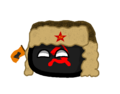
With a Ushanka hat
-
-

-
Red Sun


Variants
[edit]-
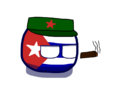 Castroism (Cuban Flag)
 -
Castroism (Cuban Flag)
-
Castroism (Cuban Flag)
-
Castroism (M-26-7 Movement)
-
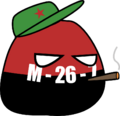 Castroism (M-26-7)
 -
Castroism (M-26-7)
-
Arstotzka System
-
 Flag of Castroism (Cuba)
 -
 Flag of Castroism (M-26-7)


Comics and Artwork
[edit]-
By bonepennies

Navigation
[edit]


| Canon |  Acid Communism • Acid Communism •  Agrarian Socialism Agrarian Socialism  Alter-Globalism • Alter-Globalism •  Anarcho-Collectivism • Anarcho-Collectivism •  Anarcho-Communism • Anarcho-Communism •  Anarcho-Pacifism • Anarcho-Pacifism •  Anarcho-Syndicalism • Anarcho-Syndicalism •  Anationalism • Anationalism •  Anti-Fascism • Anti-Fascism •  Autonomism • Autonomism •  Barracks Communism • Barracks Communism •  Circulus Theory • Circulus Theory •  Classical Social Democracy • Classical Social Democracy •  Communization Theory • Communization Theory •  Conservative Socialism File:Red Tory.png File:French RepublicanLeft LFI Party.png • Conservative Socialism File:Red Tory.png File:French RepublicanLeft LFI Party.png •  Council Communism • File:Cybercom.png Cybercommunism • Council Communism • File:Cybercom.png Cybercommunism •  Democratic Socialism Democratic Socialism  • •  Eco-Anarchism • Eco-Anarchism •  Eco-Socialism • Eco-Socialism •  Ego-Communism • Ego-Communism •  Ergatocracy • File:GeoSynd.png Geosyndicalism • File:Greensynd.png Green Syndicalism • File:Guildsoc.png Guild Socialism • File:Impossible.png Impossibilism • Ergatocracy • File:GeoSynd.png Geosyndicalism • File:Greensynd.png Green Syndicalism • File:Guildsoc.png Guild Socialism • File:Impossible.png Impossibilism •  Independence Anarchism • Independence Anarchism •  Ismism • Ismism •  Italian Left Communism • Italian Left Communism •  Left-Wing Market Anarchism • Left-Wing Market Anarchism •  Left-Wing Nationalism • Left-Wing Nationalism •  Left-Wing Populism • Leninism • Left-Wing Populism • Leninism •  Liberal Socialism • Liberal Socialism •  Libertarian Municipalism • Libertarian Municipalism •  Libertarian Socialism • Maoism • Libertarian Socialism • Maoism •  Market Socialism • Market Socialism •  Marxism • Marxism–Leninism Marxism • Marxism–Leninism  • •  Marxism–Leninism–Maoism File:MLM-Alt.png • Marxism–Leninism–Maoism File:MLM-Alt.png •  Marxist Feminism • File:Minsocf.png Minarcho-Socialism • Marxist Feminism • File:Minsocf.png Minarcho-Socialism •  Monarcho-Socialism • Monarcho-Socialism •  Monarcho-Syndicalism • Monarcho-Syndicalism •  Mutualism • Mutualism •  National Anarchism • National Bolshevism • National Anarchism • National Bolshevism •  National Communism National Communism  • File:Sorelia.png National Syndicalism • • File:Sorelia.png National Syndicalism •  Neo-Marxism • File:Partip.png Participism • File:Platformism.png Platformism • Posadism • Neo-Marxism • File:Partip.png Participism • File:Platformism.png Platformism • Posadism •  Queer Anarchism • Queer Anarchism •  Reactionary Socialism File:Reactionary Socialism.png • Reactionary Socialism File:Reactionary Socialism.png •  Reformist Marxism • Reformist Marxism •  Religious Socialism • Religious Socialism •  Revolutionary Progressivism • File:Ricardosoc.png Ricardian Socialism • File:Situ.png Situationism • File:Socan2.png Social Anarchism • Socialism • File:Soc21.png Socialism of the 21st Century • Revolutionary Progressivism • File:Ricardosoc.png Ricardian Socialism • File:Situ.png Situationism • File:Socan2.png Social Anarchism • Socialism • File:Soc21.png Socialism of the 21st Century •  Socialist Transhumanism • Socialist Transhumanism •  State Socialism • Strasserism • State Socialism • Strasserism •  Syndicalism • Syndicalism •  Synthesis Anarchism • File:Totlib.png Total Liberationism File:Vegarch.png • Synthesis Anarchism • File:Totlib.png Total Liberationism File:Vegarch.png •  Trotskyism • File:Utsoc.png Utopian Socialism • Trotskyism • File:Utsoc.png Utopian Socialism •  Xenofeminism Xenofeminism | ||
|---|---|---|---|
| Regional |  African Socialism • African Socialism •  Arab Socialism • Arab Socialism •  Austromarxism • Austromarxism •  Ba'athism • Ba'athism •  Babouvism • File:Lysnoir.png Black Lilyism • Babouvism • File:Lysnoir.png Black Lilyism •  Blanquism • Blanquism •  Bolivarianism • Bolivarianism •  Buddhist Socialism • Buddhist Socialism •  Bundism • Bundism •  Chavismo • Chavismo •  Christian Socialism • Christian Socialism •  Crusade of Romanianism • File:Deleon.png De Leonism • Crusade of Romanianism • File:Deleon.png De Leonism •  Democratic Confederalism • Democratic Confederalism •  Dengism • File:TLeveller.png Diggerism • Dengism • File:TLeveller.png Diggerism •  Ethnocacerism • Ethnocacerism •  Eurocommunism • File:Euskadi Carlism.png Euskadi Carlism • File:Fabian.png Fabian Socialism • File:Frankfurt.png Frankfurt School • Eurocommunism • File:Euskadi Carlism.png Euskadi Carlism • File:Fabian.png Fabian Socialism • File:Frankfurt.png Frankfurt School •  Gaddafism • Gaddafism •  Gandhian Socialism • Gandhian Socialism •  Guevarism • Guevarism •  Hoxhaism • Hoxhaism •  Ho Chi Minh Thought • Islamic Socialism • Juche • File:Khrusch.png Khrushchevism • Ho Chi Minh Thought • Islamic Socialism • Juche • File:Khrusch.png Khrushchevism •  Labour Zionism • Labour Zionism •  Liberation Theology • Liberation Theology •  Libertarian Possibilism • Libertarian Possibilism •  Machajskism • Machajskism •  Mao-Spontex • Mao-Spontex •  Maoism–Third Worldism • File:Mariateguism.png Mariateguism • File:Mladorossi.png Mladorossism • Maoism–Third Worldism • File:Mariateguism.png Mariateguism • File:Mladorossi.png Mladorossism •  Neosocialism • Neosocialism •  Neozapatismo • Neozapatismo •  Pol Potism • File:Prout.png Proutism • File:Sewersoc.png Sewer Socialism • Titoism • Pol Potism • File:Prout.png Proutism • File:Sewersoc.png Sewer Socialism • Titoism •  Tridemism Tridemism  • File:Vperedist.png Vperedism • • File:Vperedist.png Vperedism •  Yellow Socialism Yellow Socialism | ||
| Fictional | |||
| Variants |
| ||


.png)


| Canon |  Alt-Lite • Alt-Lite •  Alt-Right • Alt-Right •  Civic Nationalism • Civic Nationalism •
 Cultural Nationalism • Cultural Nationalism •  Eco-Nationalism • Eco-Nationalism •  Ethnonationalism • Ethnonationalism •  Ethnocracy • Ethnocracy •  Ethnopluralism • Ethnopluralism •  Falangism • Falangism •  Homofascism • Homofascism •  Irredentism • Irredentism •  Isolationism Isolationism  • •  Jingoism • Left-Wing Nationalism • Jingoism • Left-Wing Nationalism •  National Agrarianism • National Anarchism • File:Nazbol-Alt.png National Bolshevism • National Agrarianism • National Anarchism • File:Nazbol-Alt.png National Bolshevism •  National Capitalism • National Communism • National Capitalism • National Communism •  National Conservatism • National Conservatism •  National Feminism • National Feminism •  National Liberalism • National Liberalism •  National Libertarianism • National Libertarianism •  Nazism • Nazism •  Nazi Transhumanism • Nazi Transhumanism •  Nationalism • Nationalism •  Paleoconservatism • Paleoconservatism •  Pan-Nationalism • Pan-Nationalism •  Patriotism • Patriotism •  Post-Colonial Anarchism • Post-Colonial Anarchism •  Protectionism • Protectionism •  Racial Nationalism • Racial Nationalism •  Religious Nationalism • File:RevNat.png Revolutionary Nationalism • Religious Nationalism • File:RevNat.png Revolutionary Nationalism •  Stransserism • Strasserism • Synthesis Anarchism • Stransserism • Strasserism • Synthesis Anarchism •  Ultranationalism • Ultranationalism •  Welfare Chauvinism • Yellow Socialism Welfare Chauvinism • Yellow Socialism |
|---|---|
| Regional | African Socialism • Arab Socialism • Ba'athism •  Black Hundredism • Bolivarianism • Black Hundredism • Bolivarianism •  Brazilian Integralism • Brazilian Integralism •  British Fascism • British Fascism •  Caudillismo • Ethnocacerism • Caudillismo • Ethnocacerism •  Francoism • File:PPF.png French Fascism • Gaddafism • Francoism • File:PPF.png French Fascism • Gaddafism •  Gaullism • Gaullism •  Hindutva • Ho Chi Minh Thought • File:Hu.png Hungarism • File:Hutupower.png Hutu Power • Hindutva • Ho Chi Minh Thought • File:Hu.png Hungarism • File:Hutupower.png Hutu Power •  Ilminism • Independence Anarchism • Ilminism • Independence Anarchism •  Indigenism • Indigenism •  Integral Nationalism • Integral Nationalism •  Integralism Integralism  • •  Jacobinism • Jacobinism •  Jewish-Nazism • Jewish-Nazism •  Kahanism • Kahanism •  Kemalism • Labour Zionism • Kemalism • Labour Zionism •  Legionarism • Legionarism •  Metaxism • Metaxism •  National Democracy • National Democracy •  National Radicalism • Neosocialism • National Radicalism • Neosocialism •  Odalism • File:Pancasila icon.png Pancasila • Odalism • File:Pancasila icon.png Pancasila •  Peronism • Pol Potism • File:Perkonkrusts.png Pērkonkrusts • Peronism • Pol Potism • File:Perkonkrusts.png Pērkonkrusts •  Religious Zionism • File:Revzion.png Revisionist Zionism • Religious Zionism • File:Revzion.png Revisionist Zionism •  Showa Statism • Showa Statism •  Silver Legionism • Tridemism • Silver Legionism • Tridemism •  Zionism • Zionism •  İttihadism İttihadism |


