

Wiki is in the process of importing stuff
Please be patient
imported>Coco0330 No edit summary |
m new format |
||
| Line 352: | Line 352: | ||
*[[File:Internat.png]] [[Internationalism]] | *[[File:Internat.png]] [[Internationalism]] | ||
*[[File:LeftAntiCom.png]] [[Liberal Socialism|Left Anti-Communism]] | *[[File:LeftAntiCom.png]] [[Liberal Socialism|Left Anti-Communism]] | ||
*[[File: | *[[File:Mediacracy.png]] [[Mediacracy]] | ||
*[[File:Monsoc.png]] [[Monarcho-Socialism]] | *[[File:Monsoc.png]] [[Monarcho-Socialism]] | ||
*[[File:PolState.png]] <s>[[Police Statism]] (Collaborated with)</s><ref>https://en.wikipedia.org/wiki/Orwell%27s_list</ref> | *[[File:PolState.png]] <s>[[Police Statism]] (Collaborated with)</s><ref>https://en.wikipedia.org/wiki/Orwell%27s_list</ref> | ||
| Line 738: | Line 738: | ||
*[[File:Minarchist.png]] [[Minarchism]] - Read above. | *[[File:Minarchist.png]] [[Minarchism]] - Read above. | ||
*[[File:Reactlib-icon.png]] [[Reactionary Libertarianism]] - Come on, are you serious?! | *[[File:Reactlib-icon.png]] [[Reactionary Libertarianism]] - Come on, are you serious?! | ||
*[[File: | *[[File:Mediacracy.png]] [[Mediacracy]] - Stop manufacturing consent! | ||
*[[File:8ValuesBall.png]] [[File:Centrist-purple.png]] A whole load of political tests - NO, MARXISM IS NOT AUTHORITARIAN, DUMBASSES! | *[[File:8ValuesBall.png]] [[File:Centrist-purple.png]] A whole load of political tests - NO, MARXISM IS NOT AUTHORITARIAN, DUMBASSES! | ||
*[[File:Mesocon.png]] [[Conservative Liberalism|Pragerism]] - Stop quoting me and then doing the exact thing I told you not to do in that quote! | *[[File:Mesocon.png]] [[Conservative Liberalism|Pragerism]] - Stop quoting me and then doing the exact thing I told you not to do in that quote! | ||
Latest revision as of 07:16, 28 June 2026
Not to be confused with File:Socliber.png Social Libertarianism or File:Liberalsoc.png Liberal Socialism.
"If we don't believe in free expression for people we despise, we don't believe in it at all."
Libertarian Socialism (Also known as Free Socialism) encompasses a wide range of ideologies, but mainly rejects the conception of  socialism as a File:Statesoc.png statist form where the state bureaucracy retains centralized control of the economy. Workers within a libertarian socialist society have Direct Democratic control over the means of production. File:Libms.png Some types of Libertarian Socialism believe that Markets can exist within a Socialist society, as a libertarian form of File:Marketsoc.png Market Socialism, while others, such as File:Libmarx.png Libertarian Marxism, and
  Anarcho-Communism, do not. Some Libertarian Socialists wish to abolish the state altogether, like the aforementioned Anarcho-Communism, while others, such as File:Minsocf.png Minarcho-Socialism believe that a small state can exist within a libertarian socialist framework.
History
[edit]Emergence
[edit]Libertarian Socialism was first emerged during the Enlightenment in France. When  Marxist and Socialist ideologies first became popular in Europe, Libertarian Socialism was gaining popularity as well and it formed it own faction in the First International, which became the
  anti-authoritarian faction.
  Mikhail Bakunin, leader of the libertarian socialist faction rejected the idea of a File:LibSyn.png"dictorship of the proletariat"File:Libmarx.png as he said it would make a new ruling class, which would oppress the working class, which soon lead to its ejection by the File:Karl Marx.pngMarxist factionFile:Orengels.png at the Hague Congress in 1872.
20th century
[edit]In the early part of this period, libertarian socialism was equal in influence to both  social democracy and
  communism. Demonstrating this influence was the formation of the Anarchist International, which drew in many anti-capitalists. Using this new organizational power, they were able to position themselves against both of their ideological rivals for the next 50 years.
Before the Russian Revolution, libertarian socialists played a crucial role in campaigning for land reform, and against Tsarist authoritarianism. These campaigns were led by the  Narodniks, File:Esers.png the Left Social Revolutionary Party, and various anarchist collectives. These campaigns helped to instigate the Russian Revolutions of 1905 and 1917. Unfortunately, in the latter revolution, when the File:Orthlen.png Bolsheviks seized control, they purged libertarian socialists left and right, leading to their political irrelevancy in Russia.
In the 1936 Spanish Revolution, the  CNT was crucial to the subsequent creation of libertarian socialist communities and collectives within that country. These collectives allowed delegates to take charge in certain situations, with the caveat of direct recall. Unfortunately for the CNT, when File:Franco-alt.png Francisco Franco came to power in Spain, the CNT went into a rapid decline.
Post-World War II
[edit]After the war, the ideology was ostracized from the labor movement, at least in part due to its inability to wrest control over unions from communists, social democrats, or  business unionists. Additionally, because of the seeming ease at which reformist unions gained their rights, they felt no need to engage in the radical politics espoused by libertarian socialists.
File:Johnsonite.png Johnson-Forest Tendency
[edit]The Johnson–Forest Tendency was a Marxist political current that emerged in the United States during the 1940s and 1950s. It was primarily associated with the work of C. L. R. James, Raya Dunayevskaya, and Grace Lee Boggs. The name of the tendency came from the pseudonyms used by James (“J. R. Johnson”) and Dunayevskaya (“Freddie Forest”) during their collaboration. Over time, their ideas developed into a File:Ultraprogressivism.pngdistinctive strand of Marxist theory combining libertarian Marxism, Marxist humanism, and radical critiques of bureaucratic socialism.
The intellectual origins of the Johnson–Forest Tendency lay in the revolutionary socialist debates surrounding the Trotskyist movement. In the 1930s and early 1940s, both James and Dunayevskaya were initially committed to the political program of Leon Trotsky, which sought to defend Marxist revolutionary principles while opposing the authoritarian direction of the Soviet Union under Joseph Stalin. During this early period the group remained closely connected to Trotskyist organizations and still retained elements of File:Orthlen.pngLeninist revolutionary strategy.
However, their views evolved significantly as they reassessed the nature of the Soviet system and the role of revolutionary movements in the modern world. The Johnson–Forest thinkers began arguing that the Soviet Union should be understood not as a workers’ state but as a form of “state capitalism,” in which a bureaucratic ruling class controlled the economy while exploiting workers. This analysis led them to question traditional Leninist party structures and eventually to move toward more decentralized and File:Libmarx.pnglibertarian interpretations of Marxism.
A key element of their theoretical development was the rediscovery and reinterpretation of the early philosophical writings of Karl Marx, particularly those emphasizing human creativity, alienation, and the self-emancipation of the working class. From this perspective emerged File:MarxistHumanism.pngMarxist humanism, a framework that emphasized the central role of human freedom, consciousness, and moral agency in revolutionary transformation. Rather than viewing socialism solely as an economic system, Johnson–Forest theorists saw it as a process of human liberation rooted in everyday struggles.
The group also placed strong emphasis on grassroots movements and the political agency of ordinary people. They studied labor struggles, community activism, and cultural resistance as sources of revolutionary change. This orientation aligned them with currents later described as libertarian Marxism, which reject rigid party hierarchies in favor of worker self-organization and democratic participation.
Another important aspect of the Johnson–Forest Tendency was its engagement with struggles against racial oppression in the United States. C. L. R. James and Grace Lee Boggs in particular analyzed the Black freedom struggle as a revolutionary force capable of transforming American society. Their work helped lay intellectual foundations for currents later described as File:BlackMarxism.pngBlack Marxism, which integrate Marxist analysis with the historical experience of racial domination and resistance.
Feminist analysis also played an increasingly important role in the group’s thought. Raya Dunayevskaya developed arguments that connected women’s liberation with the broader struggle against alienation and exploitation, contributing to traditions now known as File:Marxfem.pngMarxist feminism. These ideas emphasized that revolutionary transformation required confronting multiple forms of oppression embedded in social structures.
By the early 1950s internal disagreements led to the fragmentation of the Johnson–Forest Tendency. Dunayevskaya went on to develop a distinct philosophical current centered on Marxist humanism, while James and Boggs continued their own forms of political and intellectual activism. Despite these divisions, the group’s influence endured in later radical movements, particularly those emphasizing participatory democracy, cultural transformation, and the revolutionary potential of marginalized communities.
Through its synthesis of humanist philosophy, anti-bureaucratic socialism, and engagement with struggles for racial and gender equality, the Johnson–Forest Tendency contributed an enduring perspective to twentieth-century Marxist thought—one that sought to reconcile revolutionary theory with the lived experiences of social movements and the quest for human freedom.
 Letovism
[edit]
Yegor Letov (1964–2008) was a central figure of the Soviet and post-Soviet underground music scene. As the founder of the influential punk band Grazhdanskaya Oborona, Letov became one of the most distinctive cultural voices of late Soviet counterculture.
Letov grew up in Omsk during the later years of the Soviet state, a period when official cultural institutions exercised strict control over artistic expression. As a young musician he became involved in underground rock and punk circles that rejected the conformity of state-approved culture. Inspired by the international File:Punk.pngpunk movement and its emphasis on rebellion and do-it-yourself creativity, Letov developed a deliberately raw musical style that combined distorted sound, improvised recording methods, and confrontational lyrics.
During the 1980s his music and artistic activities attracted the attention of Soviet authorities. The underground rock scene often existed in tension with the government, and Letov himself faced surveillance, censorship, and forced psychiatric treatment—an experience that reinforced his deep distrust of formal political institutions. These encounters helped shape the File:Radape.pnganti-political tone that became common in his lyrics, which frequently rejected both bureaucratic authority and conventional political participation.
Philosophically, Letov’s writing drew on  nihilistic themes, emphasizing the collapse of meaning and the rejection of established ideological frameworks. His work often explored existential alienation, absurdity, and the futility of rigid political systems. At the same time, his lyrics sometimes incorporated revolutionary imagery, references to historical socialist movements, and fragments of Soviet symbolism, creating a deliberately File:Contrarianism-Icon.pngcontradictory blend of influences.
Following the dissolution of the Soviet Union in 1991, Letov briefly became associated with the National Bolshevik Party, a controversial political movement that combined elements of radical nationalism and revolutionary socialism. Within this milieu, Letov expressed sympathy for forms of  national communism and continued to reference the legacy of Vladimir Lenin in his artistic and political statements. However, his relationship with organized politics remained unstable and often contradictory.
Even during his involvement with the File:Limonov.pngNational Bolshevik movement, Letov retained a strong contrarian streak. His public statements frequently shifted between ideological extremes, reflecting a deliberate refusal to commit fully to a single coherent doctrine. Over time he distanced himself from formal party politics and returned to focusing primarily on music, poetry, and philosophical reflection.
In his later years, Letov’s ideas increasingly reflected themes similar to  post-left anarchist thought, emphasizing individual autonomy, cultural rebellion, and skepticism toward all forms of political authority. He also expressed interest in ecological concerns and critiques of industrial civilization, themes that occasionally appeared in his later lyrics and interviews.
Throughout his career, Letov cultivated an image of radical independence. His work blended anarchic rebellion, nihilistic philosophy, revolutionary symbolism, and punk aesthetics into a cultural project that resisted easy ideological categorization. By combining these influences—ranging from underground music culture to fragments of revolutionary political thought—Letov helped shape one of the most distinctive voices of late Soviet and post-Soviet counterculture.
Beliefs
[edit]Libertarian Socialism is a anti-authortarian and  anti-capitalist ideology that advocates for
  social and economic equality.
Socialism
[edit]In something that separates them from File:Statesoc.png authoritarian socialists, libertarian socialists believe in File:Synd.png worker ownership of the means of production, File:WPD.png workplace democracy, and File:Cooperative Socialism.png workers cooperatives. Libertarian socialists see state socialist concepts such as state ownership of the means of production as equal to File:Statecap.png State capitalism. Like other socialists, Libertarian socialists are highly opposed to  capitalist economics, as they see capitalism as a manifestation of human greed that must be overthrown in a File:Impossible.png social revolution.
Opposition to authoritarianism
[edit]Libertarian Socialism believes true Socialism can’t be achieved without a File:Directdem.png direct democracy, and opposes bureaucracy and File:Parl.png parliamentarianism. Libertarian socialists believe in the upholding of File:Civlibert.png civil liberties like freedom of speech and freedom of expression. Many libertarian socialists believe in a File:Minsocf.png socialist society with a reduced amount of government power.
She also believes most of former socialist governments have been corrupted by tyranny and capitalism, like File:Cball-China.png The People’s Republic of China or the File:Cball-USSR.png Union of Soviet Socialist Republics.
Variants
[edit]Libertarian Market Socialism (LibMarkSoc) is an economically left-wing, libertarian, and generally culturally progressive ideology who can be described as a more moderate version of File:Mutalist.png Mutualism. LibMarkSoc believes in the libertarian principle of limited government combined with the economic view that while the means of production should belong to the workers who use them, goods and services should be provided through a market economy contributed to by worker-owned businesses and co-ops. They support local direct democracy, with a limited, higher-level federal government.
Libertarian Marxism (LibMarx) is an economically far-left, libertarian, revolutionary, internationalist, and progressive ideology that supports worker ownership of the means of production and eventual transition into a stateless, moneyless, and classless society as per typical Marxist thought, however, he supports a decentralized approach where the working class leads the revolution themselves as opposed to acting with the aid of a vanguard party, and strongly emphasizes the libertarian and anti-authoritarian aspects of Marx's writings, specifically in his later work. It is almost always coupled with culturally left leanings.
Personality
[edit]The epitome of "fuck you, I won't do what you tell me". Annoys other socialists by complaining about how statist they are. Hangs out with other non-capitalist LibLeft ideologies a lot, although they frequently ignore them when they get into debates.
Really into punk rock and RATM.
Is the older Sibling of File:Libertarian.png Right-Libertarianism
Is the child of File:Civlibert.png Libertarianism and Socialism
Is also obviously autistic
How to Draw
[edit]- Draw a ball
- Draw an alternating pattern of red and a near-black stretching from the edge and meeting at the center, with 10 segments.
- Draw a star with the reverse colors in the center of the ball.
- Fill in the star and clean up the edges.
- Add the eyes and you're done!
| Color Name | HEX | RGB | |
|---|---|---|---|
| Red | #FF0000 | rgb(255, 0, 0) | |
| Black | #141414 | rgb(20, 20, 20) | |
Relationships
[edit]Comrades
[edit] Socialism - Dad! Though you can be a bit statist sometimes, we still get along otherwise.
- File:Minsocf.png Minarcho-Socialism - My more extreme sibling.
- File:Ricardosoc.png Ricardian Socialism - A good predecessor and one of the earliest to acknowledge the labor as a key source of wealth.
 Anarcho-Collectivism - One of my first friends. We're still close.
 Anarcho-Communism - My breadpilled, and most successful comrade.
 Anarcho-Syndicalism - My comrade that has watched Noam Chomsky on YouTube too many times.
 Left-Wing Market Anarchism - My slightly edgy pal. We started at different points and came to similar conclusions.
- File:Socan2.png Social Anarchism - RIP David Graeber.
 Autonomism - Finally, someone who also gets the right conclusion from reading Marx. Why do you dislike the unions though?
- File:Globnat.png Alter-Globalism - Yeah, let's teach the world to sing in harmony together!
 Anti-Authoritarianism - Helps me beat up fascists and protects me from tankies.
- File:Bundis.png Bundism - Jewish best friend.
- File:Councom.png Council Communism - The second most based marxist.
- File:Demcon.png Democratic Confederalism - Much love for File:Rojava.png Rojava.
- File:Dsa.png Democratic Socialism - Establishmentarian in the parliaments who lacks revolutionary potential, but he too values socialism and freedom and we get along pretty well!
- File:TLeveller.png Diggerism - Definitely the best product of the English Revolution, shame the landlords suppressed you.
- File:Guildsoc.png Guild Socialism - Very good friend of mine with similar goals, even if he does have a slight obsession with the Middle Ages.
 Independence Anarchism - File:Cball-Catalonia.png Catalonia will be free once more!
- File:Lpop.png Left-Wing Populism - We walk together at protest marches. For the many, not the few!
- File:LiberationTheo.png Liberation Theology - Now that's the kind of religion I approve. File:Jesus.png Christ was the original revolutionary!
- File:Cathwor.png Catholic Workerism - They get what I mean, even if they're a little too socially conservative. Hope you and him won't get at each other's throats like the last time...
- File:Bckchn.png Libertarian Municipalism - Long live Comrade Bookchin.
- File:Libpos.png Libertarian Possibilism - A bit too moderate, but a great buddy nonetheless.
- File:Local.png Localism - Power to the communities!
- File:Rozalia.png Luxemburgism - The ultimate choice is, indeed, between socialism and barbarianism.
- File:Marxfem.png Marxist Feminism - Women of the world, unite!
- File:Mutalist.png Mutualism - The original Anarchist.
- File:Zapa.png Neozapatismo - He runs the EZLN with my ideas.
- File:Prout.png Proutism - My pro-market friend from File:Cball-India.png India.
 Queer Anarchism &
  Anarcha-Feminism - Unless there is equality for all, there is no equality at all.
- File:Raddem.png Radical Democracy and File:Directdem.png Direct Democracy - The best forms of democracy.
- File:Synd.png Syndicalism - Power to the unions!
- File:Civlibert.png Civil Libertarianism - Look, we're both for human rights and freedom, but you're just too squeamish and a bit too averse to any violence. I mean, good luck getting a revolution through posting the dirty laundry of the establishment on the net. Either way, thanks for helping me with legal defence and publishing my exposés.
- File:Insarch.png Insurrectionary Anarchism - And you appear to have the inverse problem. I like your willingness to fight the establishment until your last breath but you seem a little too trigger-happy. So uh... calm down and provide at least some plan for what comes next, OK, buddy? Still I appreciate how most of you support me.
- File:Urb.png Patchwork - File:Cball-Christiania.png Freetown Christiania is an awesome project!
 Soulism - A good fellow, if a little weird at times. What did you add to the MJ you gave me last time?
- File:Situ.png Situationism - Another good acquaintance.


Frenemies
[edit] Jacobinism - Your trailblazing of popular revolutions will never be forgotten... but, for the love of goodness, STOP GUILLOTINING EVERYONE WHO DISAGREES WITH YOU!
- File:Lassalle.png Lassalleism - Cousin, we agree on a number of issues but how am I 'utopian' when I came closer to reality in a lot more societies than you?
- File:Trot.png Trotskyism - I'm not ready to forgive you for betraying my cousins (File:Cball-Naissaar.png Kronstadt and File:Makhnovism.png Makhnovia anyone?), but at least you resisted File:Stalin.png Stalin.
 Agrarian Socialism - The SRs were great mostly, and Zapata and Villa provided a lot of inspiration for some of my followers, but Kerensky and Greeley are meh at best.
 Conservative Socialism - A conservative guy, but aside from cultural stance, you're just a bit authoritative.
- File:Deleon.png De Leonism - We agree on the opposition towards bureaucratic despotism, but why so much hatred towards unions?
- File:Frankfurt.png Frankfurt School - Focuses on theory (specifically critical theory) a little too much, but we still keep friendly. I'm concerned that some of your File:Habermas.png modern followers flirt excessively with the establishment, though.
 Guevarism - Let's just say that you weren't good at picking role models. Still, thanks for inspiring the younger generations!
- File:Hochi.png Ho Chi Minh Thought - I rooted for you during the war, but I'm not so sure about your present-day successors (especially File:NguyễnTấnDũng.png him).
 Labour Zionism - The least bad Zionist, but I wish you had enshrined total legal equality of Jews and Arabs in law since the independence, or, failing that, had actually respected the Two State Solution.
 Left-Wing Nationalism - I support your fight for the freedom of your nation, but please do understand that real socialism comes from workers, not the File:Statesoc.png bureaucracy.
- File:Liberalsoc.png Liberal Socialism - We both love freedom, Chomsky seems to admire you a lot, and Orwell and Rosselli were based, but you aren't radicalized enough, and I have extremely mixed feelings on Vaush.
 Maoism–Third Worldism - Based internationalism and anti-imperialism. That said, please do keep in mind that every time the state has control over the supposed File:ErgaDictature.png 'dicatorship of the proletariat', it somehow tends to end up a File:Vanguardism.png 'dictatorship of the party', and then simply a File:Dictatorship.png dictatorship.
- File:Marketsoc.png Market Socialism - You can't go wrong with co-ops or workplace democracy, however, most of my followers are skeptical of markets.
- File:Radlib.png Radicalism - Too moderate, especially on the property questions, though for their time many of your followers were rather cool. I'm very doubtful about the likes of Hugo or Clemenceau, OTOH.
- File:Bernst.png Reformist Marxism - Some of your branches like File:JapCom.png the JCP have good takes even if they are too mild, but Bernstein was the original File:SocImp.png Social-Imperialist.
- File:Ultraprogressivism.png Revolutionary Progressivism - We both dislike capitalism but, for Pete's sake, chill out (and stop simping for authoritarians claiming to be 'progressive').
- File:Soc21.png Socialism of the 21st Century - Boric likes you but many of your variants aren't very good especially File:Chavismo.png this one.
- File:Socliber.png Social Libertarianism - If I were spicy, you'd be mild. Capitalism? Pfft.
- File:Steinval.png Steiner-Vallentyne School - You have some good views. But you can go further!
 Social Liberalism - Even milder than File:Socliber.png him but generally you're heading in the right direction. But curse LBJ for escalating the Vietnam War!
 Also, I shot JFK- File:Socgeo.png Social Georgism - You're even more mild than File:Socliber.png SocBert, but LVT is kinda based.
 Social Democracy - A slightly socialist guy, but he's way too moderate. He thinks that reforming capitalism is better than abolishing it, and idk about him...
- File:Utsoc.png Utopian Socialism - Some of your variants are interesting, others (including File:Utopianism2.png the original Utopia, ironically) are cringe File:Statesoc.png bureaucrats.
- File:Euskadi Carlism.png Euskadi Carlism - The least bad monarchist is still a monarchist, but can't say I wouldn't prefer you greatly to Juan Carlos. Not sure about Titoist ideas, but a confederal Spain sounds awesome!
- File:Ghandi.png Gandhian Socialism - Look, I admire and respect your non-violent approach, but even you seemed to acknowledge that it wouldn't always work. Sometimes, an opponent simply won't understand anything but force.
 Ba'athism - My opposition to
  his warmongering does not mean I endorse your ethnic cleansing or dictatorial tendencies. However, you did promise autonomy for File:Demcon.png Rojava and did oppose the Western establishment, and I'm not quite sure whether File:Cball-FSA.png your opposition File:SSG.png will turn out better. Shame you killed Omar Aziz and his ideals were soon abandoned by the opposition for Islamism.
- File:Chavismo.png Chavismo - Chavez and Maduro may get socialism wrong, but I don't think the US are in the right position to criticize them.
 Anarcho-Conservatism - One of the more tolerable (and tolerant) conservatives. Michéa has some... interesting ideas.
- File:Bhl.png Bleeding-Heart Libertarianism - Way too sympathetic to capitalism for my liking, but at least we agree that gay couples should have the right to defend their MJ plots with guns.
- File:Tradcon.png Classical Conservatism - As far as you are from my ideals,
 Orwell found you preferable to File:Fashidiot.pngFile:Nutzi.png totalitarians File:Stalin.png
 of either flank.
 - File:Crusade of Romanianism.png Crusade of Romanianism - My... ultranationalist son?
- File:Distributist.png Distributism - Not bad for a self-avowed bourgeois ideology, though I wish you were more left-leaning.
- File:Geokitty.png Georgism - A capitalist, but his heart is kind of in the right place.
- File:LeftRothbardianismPix.png Left-Rothbardianism - A more extreme version of File:Socliber.png him. Better than the regular
 ancap, I guess.
 - File:Liberaltarianism.png Liberaltarianism - Even more pro-markets than File:Bhl.png them, but your File:LeftLiberaltarianism.png left-leaning version is just good enough with me. File:CoryBooker.png Cory Booker is right on Israel-Palestine question, though he's too Atlanticist.
 Post-Leftism - ...Good luck with that, I guess.
- File:Epstein.png Epsteinism - I don’t know this guy I swear!!


Oppressors
[edit]- File:Crapitalism.png Crapitalism - What some people don't realize is that """capitalism""" needs a state to function.
 Authoritarian Capitalism - My exact polar opposite. The two things I hate the most combined.
- File:Statecap.png State Capitalism - Aren't you just the same guy above you?!
 Fascism - File:Crapitalism.png him, but without the mask of a "free market" and wants to seek power.
 Ignore how Silo is accused of acting like you.- File:Franco.png Francoism - ¡NO PASARÁN! Shit, you did pass after all. But the spirit of the Republic shall never die!
 National Capitalism - High-functioning psychopathy as an ideology.
 National "Socialism" - "TeH nAzIs ArE sOcIaLiStS bEcAuSE 'sOcIaLiStS' iS lItErAlLY iN tHeIr NaME." Sure. The social "Darwinistic" belief that only the so-called "strong" should survive is totally something a socialist would believe in.
- File:Nazbol.png National Bolshevism - Oh hell yeah, two of the worst ideologies had to produce an even worse offspring. I'm not joining your gang even if you extended an invitation. And stop appropriating the name of the Interbrigades!
At least we both kinda like Letov. - File:Statesoc.png State Socialism - Socialism is when workers–yes, the every-day working class; not the state, not unelected bureaucrats, and not some dictatorial "supreme general", control and manage the means of production.
- File:BarrCom.png Barracks Communism - With a predecessor like this, it's hardly surprising the USSR turned out the way it did.
- File:Blanqui.png Blanquism - You want a ruling minority elite, yet believe yourself to be bringing freedom to the masses. Curious.
- File:LeftCom.png Italian Left Communism - Not everyone who disagrees with you is a bourgeois! At least we both dislike
 them
them - Marxism–Leninism - "mY File:Sralin.png dIcTAtOrsHiP iS rEAl sOciAlIsM bEcAuSe I sLaP 'WoRkErS' oN tHe NaME oF eVErYtHinG!" Special thanks for backstabbing the File:Cball-2Spainrepub.png Spanish Republic before abandoning it to Franco's tender mercies, jackass.
 Pol Potism - You’re a danger to both your own country and to the socialist movement at large. Chomsky did not support you, he just knew that you were no different than you capitalist equivalents!
 Reactionary Socialism - You hate
  them
them  for all the wrong reasons.
 Yellow Socialism - Oh dear... unlike the others File:Statesoc.png you don't even have anything socialist about you except the name. Where have I seen it before?..
 Dengism - The offspring of the above and the File:Statecap.png State Cappie. Poor chinese...
 Ingsoc - Yeah... you're not a socialist. More like the end goal of File:Stalin.png him... or him, and for that matter him as well.
-
 English Socialism is the only socialism. Thoughtcriminals like you need to be unpersoned.


- File:PolState.png Police Statism File:CounterIntelState.png - FUCK YOU PIG! I WON'T DO THE THINGS AS YOU SAY!
 Alt-Right - Terminally online offspring of him with some weird tastes, need I say more?
 Alt-Lite - A little less deranged than the above, but still GTFO.
- Neoconservatism - 🎵 WHY DON'T PRESIDENTS FIGHT THE WAR?! 🎵
- File:Imp.png Imperialism - 🎵 WHY DO YOU ALWAYS SEND THE POOR! 🎵
- Neoliberalism - Reagan and Thatcher were more authoritarian than social democratic governments!
- File:Rpop-tinfoilhat.png Right-Wing Populism - Don't you realize that you just want to replace a 'liberal' elite with a conservative one? And that the File:EliteConserv.png hard-right part of the upper class uses your gullibility to make you believe that their less conservative rivals are responsible for your misfortunes, so you'd act as an attack dog for them? Once you're of no use to them, they'll gladly sideline you to rule unchallenged.
- File:Thatcher.png Thatcherism - 🎵 DING DONG THE WITCH IS DEAD! 🎵
 Third Way - Piss off you woke imperialist trash!
 And stop posting videos claiming Chomsky is a genocide denier, he's just saying they aren't really genocides, which isn't the same thing I swear.- File:Suharto.png Suhartoism - Free East Timor!
 Zionism - FREE PALESTINE! Down with apartheid! Down with File:Satanyahu.png Bibi!
 Kahanism - Aren't you just File:Satanyahu.png his forerunner?
- File:Ottoman.png Neo-Ottomanism - I will stop fighting you only when you leave File:Demcon.png them alone.
- File:Putin.png Putinism - ...Not the guy I want to have a dinner with.
Though Neocon is still worse, at least because of his greater firepower and media power at the moment. - File:Euras.png Fourth Theory - Basically File:Nazbol.png him but with a few takes lifted from the neocons (and don't deny it, you lunatic!). How can you get people to stay in your 'utopia'?
- File:Republican chile.png Kastism - Lol cope harder fashie, BTFO.
Noooo, you actually won in the 2025 presidential elections, FUCK YOU!!! - File:Confem-alt.png Conservative Feminism - Gfys, culturally conservative pseudo-feminist piece of shit!
- File:Libfem.png Liberal Feminism - Another pseudo-feminist and capitalist garbage! "MoRe fEmALe CeOs!!1" is the problem, not the solution, dammit!
- File:Libertfem.png Libertarian Feminism - "i'M tOTalLy FrEe AnD InDePeNdEnT cUz i GOt aN oNlYfAnZ aCcOuNt!" Not that I'm trying to be a moralist, but between claiming feminist empowerment and selling your basic dignity to online perverts, you can only pick one.
- File:Obj.png Objectivism - You don't want freedom; you want everyone to obey the orders of the bosses who you think are the greatest thing ever.
- File:Libertarian.png Fake "Libertarian" - You are not a libertarian, I'm the one who is the original libertarian when you stole that name from me! The word "Libertarian" has its origins from a French anarcho-communist. What you are is a propertarian who only opposes the government when they fringe on your property rights!
- File:Libcon.png Libertarian Conservatism - Care to explain how you're different from File:Libertarian.png him?
- File:Hoppef.png Hoppeanism - If I'm a "closet commie", you're an open tyrant. Also HIPPITY HOPPITY, I WON'T GET OFF YOUR "PROPERTY"!
- File:Neobert.png Neo-Libertarianism - What. The. Hell.
- Anarcho-Capitalism - You're the real oxymoron here, so stop denying it.
- File:Minarchist.png Minarchism - Read above.
- File:Reactlib-icon.png Reactionary Libertarianism - Come on, are you serious?!
 Mediacracy - Stop manufacturing consent!
 File:Centrist-purple.png A whole load of political tests - NO, MARXISM IS NOT AUTHORITARIAN, DUMBASSES!
- File:Mesocon.png Pragerism - Stop quoting me and then doing the exact thing I told you not to do in that quote!
- File:JFK.png JFKism - *loads rifle*


Further Information
[edit]Literature
[edit]- One-Dimensional Man by File:Marcuse.png Herbert Marcuse
- The Soul of Man Under Socialism by File:Indlibsoc.png Oscar Wilde
- Animal Farm by George Orwell
Wikipedia
[edit]People
[edit] Pyotr Alexeyevich Kropotkin File:Kropotkin.png
 Benjamin R. Tucker
- Noam Chomsky File:Chomsky.png
 Herbert Marcuse File:Marcuse.png
 Albert Camus File:Camus.png
- File:Cball-Ireland.png Oscar Wilde File:Indlibsoc.png
- Michael Albert File:Partip.png
- File:Cball-Canada.png Naomi Klein

- Jean-François Lyotard
- David Graeber File:Socan2.png
- Murray Bookchin File:Bckchn.png
- Howie Hawkins File:GreensUS.png
 William Morris File:WMorris.png
- C. L. R. James File:Johnsonite.png
- George Orwell
- File:Ottoman.png Abdullah Öcalan File:Demcon.png
- File:Argentina.png Mario Rodríguez Cobos (Silo) File:NewHumanism.png
- File:Cball-Chile.png Tomás Hirsch File:TomasHirsch.png
- File:Cball-Chile.png Gabriel Boric File:Boric.png
- File:Cball-Spain.png Francesc Pi i Margall File:Minmut.png
- Pigasus the Immortal File:Pig.png


Youtube
[edit]Channels
[edit]- LuckyBlackCat
- Anark
- Zoe Baker
- File:Libmarx.png Red Plateaus
- What Is Politics?
- Libertarian Communist Platform
- File:Libmarx.png Jonas Čeika - CCK Philosophy
 BadMouse

Videos
[edit]- The case for liberty (Libertarian Socialist Rants)
- Murray Bookchin on the origin of the word libertarian
- POST-CAPITALISM: A Detailed Look at How It Could Work by LuckyBlackCat
- The *Socialist* Political Compass: Methods to create socialism by LuckyBlackCat
- Political Compass Rap but it's ALL SOCIALISTS ♫ by LuckyBlackCat
- 8 Types of "Socialism" in 75 Minutes || Economic Systems Explained by LuckyBlackCat
- 8 Types of "Socialism" in 10 Minutes by LuckyBlackCat
- Marx was not a "statist" by File:Left-Nietzsche.png Jonas Čeika - CCK Philosophy
Criticism
[edit]- Libertarian Socialism Debunked by File:Mentiswave.png MentisWave
- The Road to Serfdom by File:FriedrichHayek.png Friedrich Hayek
Online Communities
[edit]References
[edit]- ↑ Libertarian Socialism Debunked by File:Mentiswave.png MentisWave
- ↑ In a now-deleted tweet, he defended sexual activity during protests.
- ↑ From Liberal to Communist: My political 'Journey', BadMouse, YouTube.com.
- ↑ As he has said in his work "on anarchism" "Let me just say that I don’t really regard myself as an anarchist thinker" and anarchist File:BobBlack.png Bob Black has also criticized Chomsky for being a statist.
- ↑ https://deadwildroses.com/2015/08/25/noam-chomsky-on-pornography/
- ↑ "With all his mostly negative feelings about Israel, Noam Chomsky continues to speak affectionately about the kibbutz [...]"
- ↑ https://m.youtube.com/watch?v=sbW_jcNvSOM
- ↑ He called Paul Robeson, a civil rights activist, "too anti-white".
- ↑ Orwell called many "crypto-communists" on his list "Jewish" as an insult.
- ↑ "That rifle on the wall of the labourer's cottage or working class flat is the symbol of democracy. It is our job to see that it stays there."
- ↑ https://www.marxists.org/archive/orwell/1938/why-ilp.htm
- ↑ https://en.wikipedia.org/wiki/Orwell%27s_list
- ↑ Lee Harvey Oswald: Background and Possible Motives
- ↑ 1984 was one of his favorite books and he especially read it when he was in the army.
Gallery
[edit]Portraits
[edit]Alternative designs
[edit]-
Libertarian Marxism
-
Libertarian Market Socialism by u/Staswalle
-
Libertarian Market Socialism
-
by ShadowRaiden
Comics and Artwork
[edit]-
"If leftist ideologies were RPG characters" by File:Liqdem.png Roxxagon, Source
-
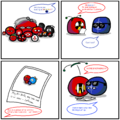
-
By u/weedmaster6669

Navigation
[edit]


| Canon | Anti-Authoritarianism •  Austrian School • File:Bhl.png Bleeding-Heart Libertarianism • File:Chilib.png Chicago School • File:Civlibert.png Civil Libertarianism • File:Crusade of Romanianism.png Crusade of Romanianism • File:Demcon.png Democratic Confederalism • File:Geolib.png Geolibertarianism • File:Glibr.png Green Libertarianism • File:Helv.png Helvetic Model • File:Liberaltarianism.png Liberaltarianism • File:Libcon.png Libertarian Conservatism File:Conbertf.png • File:Libertfem.png Libertarian Feminism • File:LiberMon.png Libertarian Monarchism • File:Libpos.png Libertarian Possibilism • Austrian School • File:Bhl.png Bleeding-Heart Libertarianism • File:Chilib.png Chicago School • File:Civlibert.png Civil Libertarianism • File:Crusade of Romanianism.png Crusade of Romanianism • File:Demcon.png Democratic Confederalism • File:Geolib.png Geolibertarianism • File:Glibr.png Green Libertarianism • File:Helv.png Helvetic Model • File:Liberaltarianism.png Liberaltarianism • File:Libcon.png Libertarian Conservatism File:Conbertf.png • File:Libertfem.png Libertarian Feminism • File:LiberMon.png Libertarian Monarchism • File:Libpos.png Libertarian Possibilism •  Libertarian Socialism • File:Libtrans.png Libertarian Transhumanism • File:Libertarian.png Libertarianism • File:Minarchist.png Minarchism • File:Minsocf.png Minarcho-Socialism • File:Natlib.png National Libertarianism • File:Neobert2.png Neo-Libertarianism File:Neobert.png • File:Paleolib.png Paleolibertarianism • File:FDF-Pirate.png Piratism • File:Polyarchy.png Polyarchy • File:Property.png Propertarianism • File:Socliber.png Social Libertarianism • File:Steinval.png Steiner-Vallentyne School Libertarian Socialism • File:Libtrans.png Libertarian Transhumanism • File:Libertarian.png Libertarianism • File:Minarchist.png Minarchism • File:Minsocf.png Minarcho-Socialism • File:Natlib.png National Libertarianism • File:Neobert2.png Neo-Libertarianism File:Neobert.png • File:Paleolib.png Paleolibertarianism • File:FDF-Pirate.png Piratism • File:Polyarchy.png Polyarchy • File:Property.png Propertarianism • File:Socliber.png Social Libertarianism • File:Steinval.png Steiner-Vallentyne School |
|---|---|
 Prefixes - You're getting a prefix, you're also getting a prefix, everyone's getting a prefix! Prefixes - You're getting a prefix, you're also getting a prefix, everyone's getting a prefix! | |
|---|---|
| Alt- | |
| Anti- | Anti-Authoritarianism •  Anti-Centrism • Anti-Centrism •  Anti-Environmentalism • Anti-Environmentalism •  Anti-Fascism • File:Jeffersondem2.png Anti-Federalism • Anti-Fascism • File:Jeffersondem2.png Anti-Federalism •  Anti-Japaneseism • Anti-Japaneseism •  Anti-Radicalism • Anti-Radicalism •  Anti-Realism • File:Makhaevism.png Anti-Intelligentsia Anarchism • Anti-Realism • File:Makhaevism.png Anti-Intelligentsia Anarchism •  Anti-Abortion Feminism • File:Radape.png Anti-Politicism • Anti-Abortion Feminism • File:Radape.png Anti-Politicism •  Anti-Feminism • Anti-Feminism •  Anti-SJW • Anti-SJW •  Anti-State Nationalism Anti-State Nationalism |
| Bio- | |
| Ego- | |
| Ethno- | |
| Geo- | |
| Left- | File:Left-AnEn.png Left Anti-Environmentalism • File:LeftAutho.png Left-Authoritarianism • File:LeftCom.png Left-Communism • File:Left-wingCon.png Left-Conservatism • File:L-lib.png Left-Liberalism • Left-Libertarianism • File:Monsoc.png Left-Monarchism • File:LeftNatio.png Left-Nationalism • File:Leftpop-0.png Left-Populism • File:Left Reformism.png Left-Reformism • File:LeftRothbardianismPix.png Left-Rothbardianism •  Left-Zionism Left-Zionism |
| Minarcho- | |
| Neo- | File:Neobol.png Neo-Bolshevism • File:Neocam.png Neocameralism • File:NeoClib.png Neoclassical Liberalism File:Nclib4.png • File:Eurocom.png Neocommunism •  Neoconservatism • File:NeoEnl.png Neo-Enlightenment • File:NeoFash.png Neo-Fascism • Neoconservatism • File:NeoEnl.png Neo-Enlightenment • File:NeoFash.png Neo-Fascism •
 Neoliberalism • File:Neobert.png Neo-Libertarianism File:Neobert2.png • File:Neolud.png Neoluddism • File:Neomarx.png Neo-Marxism • File:NeoNationalism.png Neo-Nationalism • File:Ottoman.png Neo-Ottomanism • File:Nrx.png Neoreactionaryism • File:Neo-Rockwellism.png Neo-Rockwellism • Neoliberalism • File:Neobert.png Neo-Libertarianism File:Neobert2.png • File:Neolud.png Neoluddism • File:Neomarx.png Neo-Marxism • File:NeoNationalism.png Neo-Nationalism • File:Ottoman.png Neo-Ottomanism • File:Nrx.png Neoreactionaryism • File:Neo-Rockwellism.png Neo-Rockwellism •  Neosocialism • File:Zapa.png Neo-Zapatism Neosocialism • File:Zapa.png Neo-Zapatism |
| Paleo- | |
| Post- | File:Post-an.png Post-Anarchism • File:Postconan.png Post-Colonial Anarchism • File:PostColFem.png Post-Colonial Feminism • File:Post-Genderism.png Postgenderism • File:POSTHUMANISMICON.png Post-Humanism • File:Postindusnewicon.png Post-Industrialism • Post-Leftism • File:Post-Bert.png Post-Libertarianism •  Post-Maoism • File:Post-Stalin.png Post-Stalinism Post-Maoism • File:Post-Stalin.png Post-Stalinism |
| Right- | File:Right-Anarchism.png Right-Anarchism • File:Right-AnEn.png Right Anti-Environmentalism •  Right-Authoritarianism • File:Tradcon.png Right-Conservatism • File:R-lib.png Right-Liberalism • File:Libertarian.png Right-Libertarianism • File:RigNatio.png Right-Nationalism • File:Rpop-tinfoilhat.png Right-Populism • File:Right Reformism.png Right-Reformism • File:Right-volu.png Right-Voluntaryism Right-Authoritarianism • File:Tradcon.png Right-Conservatism • File:R-lib.png Right-Liberalism • File:Libertarian.png Right-Libertarianism • File:RigNatio.png Right-Nationalism • File:Rpop-tinfoilhat.png Right-Populism • File:Right Reformism.png Right-Reformism • File:Right-volu.png Right-Voluntaryism |
| Techno | |
| Eco- | |
| Monarcho- | |
| Too many to list | |


